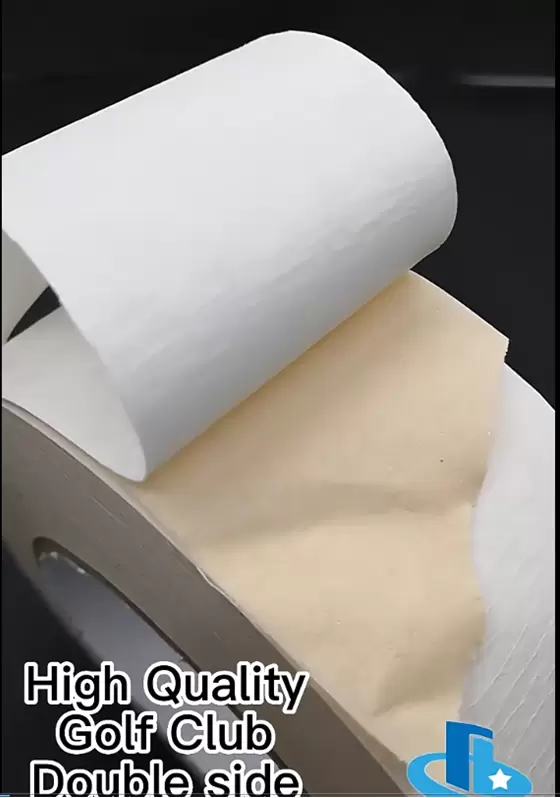
In modern manufacturing, high tack double sided tape manufacturer selection has become a critical decision for engineers, converters, and OEM procurement teams. Unlike general-purpose adhesives, high tack double-sided tapes are engineered for instant grab, strong initial adhesion, and reliable long-term bonding across multiple substrates such as plastics, metals, glass, and coated surfaces.
At Xingda New Material, high-performance adhesive tape production focuses on industrial consistency, controlled adhesive chemistry, and scalable roll-to-roll manufacturing processes suitable for global B2B supply chains.
This article explains how high tack double-sided tapes are designed, where they are used, how manufacturers ensure performance stability, and what buyers should evaluate when sourcing from a supplier like Xingda New Material.
1. What “High Tack” Means in Double Sided Tape Manufacturing
In adhesive engineering, “tack” refers to the initial stickiness of an adhesive before full curing or bonding strength development. A high tack system is designed to bond immediately upon contact without requiring heat, long dwell time, or pressure activation.
From a manufacturing perspective, high tack performance depends on:
Acrylic or rubber-based pressure-sensitive adhesive (PSA) formulation
Resin tackifiers that improve wet-out speed
Controlled viscosity for surface penetration
Carrier film or tissue structure affecting energy transfer
Liner release calibration for clean unwinding
High-quality industrial tapes like those produced in advanced factories typically use modified acrylic adhesives, which combine high tack with durability under UV, humidity, and temperature cycling.
For example, industrial double-coated tapes often rely on acrylic PSAs designed for high initial adhesion and strong shear resistance across plastics and metals.
2. How a High Tack Double Sided Tape Manufacturer Produces the Product
A professional high tack double sided tape manufacturer does not simply “coat adhesive on film.” The production involves tightly controlled multi-stage processes.
2.1 Adhesive formulation stage
Manufacturers design PSA systems based on end-use:
High tack acrylic for permanent bonding
Rubber adhesive for cost-sensitive applications
Hybrid systems for low surface energy materials (PP, PE)
Additives such as tackifiers, stabilizers, and crosslinkers determine:
Initial grip strength
Temperature resistance
Aging stability
2.2 Coating process
The adhesive is coated onto carriers using precision equipment:
Solvent or solvent-free coating lines
Slot-die or knife-over-roll coating systems
Controlled thickness tolerance (micron-level accuracy)
This stage is critical because even slight inconsistencies can affect:
2.3 Carrier selection
Carrier materials determine mechanical stability:
PET film (dimensional stability, electronics use)
Tissue paper (flexibility, splicing applications)
Foam (gap filling, automotive mounting)
Non-woven fabric (high conformability)
High-performance industrial tapes often combine PET carriers with acrylic adhesives for balanced strength and durability.
2.4 Slitting and converting
After curing:
Jumbo rolls are slit into custom widths
Die-cut shapes are produced for OEM assembly
Finished rolls are packaged under humidity-controlled conditions
3. Key Performance Characteristics Buyers Should Evaluate
When sourcing from a high tack double sided tape manufacturer, buyers should evaluate more than just “stickiness.”
3.1 Initial tack vs. ultimate adhesion
A strong industrial tape balances both without sacrificing repositionability or residue control.
3.2 Shear strength
Shear resistance is critical for vertical load-bearing applications such as:
Automotive trims
Electronic modules
Signage mounting
High-quality acrylic systems maintain performance under sustained load.
3.3 Temperature resistance
Industrial environments vary widely:
This is especially important for outdoor and automotive applications.
3.4 Surface compatibility
A professional-grade tape must bond to:
High tack adhesives are engineered to “wet out” micro-irregularities for stronger bonding.
4. Typical Industrial Applications of High Tack Double Sided Tape
High tack double-sided tapes are widely used across industries where mechanical fastening is inefficient or visually undesirable.
4.1 Automotive manufacturing
4.2 Electronics industry
4.3 Construction and signage
Industrial high bond tapes are often designed to replace screws, rivets, and liquid adhesives, reducing assembly time and improving aesthetics.
4.4 Packaging and converting
Film splicing in high-speed production
Paper and corrugated bonding
Temporary fixture applications
High tack tissue splicing tapes are commonly used in automated production lines due to fast grab and easy tearability.
5. Why OEM Buyers Choose Xingda New Material
As a specialized high tack double sided tape manufacturer, Xingda New Material focuses on B2B customization rather than off-the-shelf retail products.
5.1 OEM customization capability
Adhesive strength adjustment (low / medium / high tack)
Carrier material customization
Thickness control (tape caliper precision)
Custom release liner printing
5.2 Stable batch-to-batch quality
Industrial buyers prioritize consistency. Xingda’s production control systems aim to maintain:
5.3 Application-driven formulation
Instead of one universal adhesive, formulations are adapted for:
5.4 Supply chain advantages
6. Common Problems in Low-Quality High Tack Tapes
Many buyers switch suppliers after encountering:
Adhesive residue after removal
Edge lifting under stress
Poor adhesion on plastics
Loss of tack in humid environments
Uneven coating causing bonding failure
These issues usually stem from:
7. How to Select the Right High Tack Double Sided Tape Manufacturer
When evaluating suppliers, focus on:
Technical capability
Do they control adhesive formulation in-house?
Can they adjust tack level by application?
Do they offer technical data sheets (TDS)?
Manufacturing scale
Roll-to-roll coating lines
Slitting precision capability
Clean production environment
Quality assurance
Customization flexibility
8. Future Trends in High Tack Adhesive Tape Industry
The industry is shifting toward:
Solvent-free water-based acrylic systems
Higher performance under lightweight material bonding
Eco-friendly adhesive formulations
Increased replacement of mechanical fasteners
Smart manufacturing integration for coating control
Demand from EV automotive and electronics sectors is especially driving innovation in high tack systems.
Conclusion
Choosing the right high tack double sided tape manufacturer is not just about adhesive strength—it is about engineering reliability, production consistency, and application-specific formulation.
Xingda New Material focuses on industrial-grade adhesive systems designed for OEM applications where performance stability matters more than marketing claims. From electronics assembly to automotive bonding and industrial mounting, high tack double-sided tapes continue to replace traditional fastening methods due to efficiency and design flexibility.
For B2B buyers, the key is clear: evaluate manufacturing capability, not just product appearance.