The demand for adhesive breast support products has expanded beyond a niche styling category. Retailers, beauty brands, shapewear companies, lingerie businesses, costume suppliers, and fashion accessory distributors are increasingly looking for practical alternatives to traditional bras. For these buyers, the challenge is not simply finding adhesive tape that sticks to the skin. The real challenge is selecting a product that can provide reliable support, comfortable wear, consistent quality, and a commercially viable product format.
This is particularly important when sourcing boob tape for large bust support. Customers with larger bust sizes generally require more controlled lifting, broader skin contact, dependable adhesion, and sufficient material strength. A tape that performs adequately for occasional light support may not provide the same performance when it is expected to handle a larger load or remain comfortable for several hours.
For B2B buyers, product selection therefore needs to start with the tape construction rather than packaging or marketing claims. Fabric substrate, elasticity, adhesive formulation, width, roll length, moisture resistance, release characteristics, packaging, and customization capabilities all influence the final product.
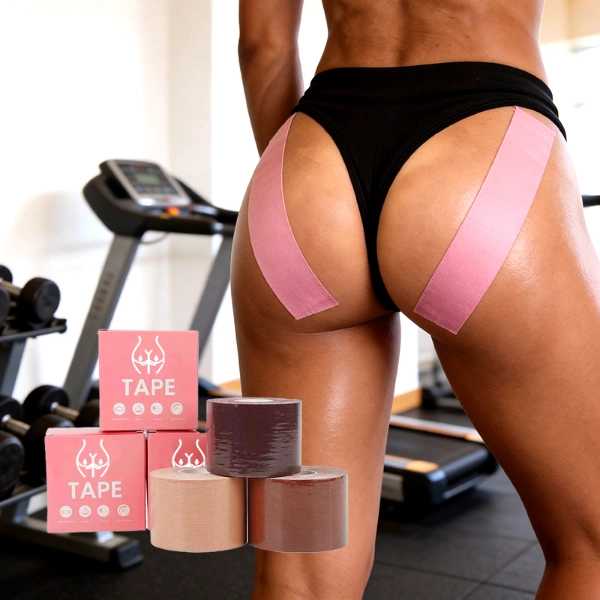
Dongguan Xingda New Material Technology Co., Ltd., operating under the Xingda New Material brand, develops and supplies a range of adhesive tape products for sports, body shaping, lifting, and specialized applications. Its Breast Lifting Support Tape is designed for breast contouring and lifting and combines an elastic fabric substrate with a medical-grade acrylic adhesive. According to the product specification, the tape is available in 5 cm or 7.5 cm widths and 3 m or 5 m roll lengths, providing different options for application and packaging strategies.
For distributors and brands evaluating this category, understanding how the product works and what specifications matter can make sourcing decisions much more straightforward.
Why Large Bust Support Requires a Different Tape Specification
Breast support tape works by transferring tensile force from the adhesive tape to the skin and fabric-supported structure. The tape itself does not function like a conventional bra with fixed cups, underwires, straps, and a band. Instead, the user creates support by positioning strips in specific directions and allowing the tape to provide a lifting or stabilizing force.
As bust size increases, several practical considerations become more important.
First, the tape must maintain adequate adhesion. A larger bust can place greater tension on the applied strips, especially when the tape is used for an upward lift. If adhesion is inconsistent, the tape may begin to peel at the edges or lose its intended position.
Second, the substrate needs suitable elasticity and recovery. A rigid tape may create uncomfortable pulling and may not follow body movement effectively. An elastic textile substrate can conform more closely to body contours while allowing controlled stretch during application.
Third, tape width becomes more relevant. Narrow strips can be useful for detailed positioning, but broader strips provide more contact area and can distribute the supporting force over a larger section of skin. This is one reason why wider formats can be useful when developing boob tape for large bust support.
Fourth, moisture management matters. Sweat, humidity, body oils, and movement can affect the interface between adhesive and skin. A breathable, moisture-managing substrate can help improve comfort during extended wear.
These factors explain why B2B buyers should avoid evaluating breast tape based solely on whether it feels sticky when tested briefly.
What Makes Boob Tape Suitable for Large Bust Support?
There is no single specification that determines whether a breast tape is suitable for a particular customer. Performance is the result of several components working together.
A practical evaluation should cover at least six areas:
Adhesive strength and consistency
Fabric elasticity and recovery
Tape width and coverage
Breathability
Moisture and sweat resistance
Removal characteristics
The relationship between these factors is more important than any single number.
For example, extremely aggressive adhesion is not automatically better. A product intended for direct skin contact also needs controlled removal. If the adhesive is difficult to remove, users may experience unnecessary discomfort or leave significant adhesive residue.
Similarly, maximum elasticity is not necessarily the objective. A tape that stretches too easily may not provide the directional support expected by the user. What matters is controlled elasticity combined with sufficient recovery and stable adhesion.
The Breast Lifting Support Tape offered by Xingda New Material uses a high-elasticity non-woven or cotton fabric substrate and a medical-grade acrylic adhesive. The product page specifies that the fabric has two-way stretch and a microporous breathable structure, while the adhesive is designed to resist water and sweat.
These construction details are especially relevant when the target market includes customers who expect both support and comfort.
The Role of Fabric Substrate
The substrate is the structural foundation of adhesive breast tape. It determines much of the tape's stretch behavior, flexibility, thickness, feel, and ability to follow body movement.
For body-support applications, a textile substrate is generally more appropriate than a rigid film because the body is constantly moving. Walking, bending, sitting, raising the arms, and changing posture all alter skin tension.
Xingda New Material's product information identifies a high-elasticity medical-grade non-woven or cotton fabric substrate. Its FAQ further specifies a fabric composition of 95% cotton and 5% ammonia fabric, with a breathable construction.
For B2B buyers, the substrate should be evaluated through practical tests rather than by material name alone.
Useful questions include:
How much does the tape stretch under a defined pulling force?
How well does it recover after stretching?
Does the adhesive remain stable when the substrate is stretched?
Does the edge curl after several hours?
Does the fabric become uncomfortable in humid conditions?
Does die cutting cause excessive fiber pulling?
Does the material maintain consistent performance between production batches?
These questions are particularly important for private-label products because inconsistent substrate quality can create complaints even when the product looks identical from the outside.
Why Elasticity Matters for Large Bust Applications
Elasticity allows the tape to conform to changing body contours.
When applying breast lifting tape, users normally place the tape with a controlled amount of tension. The amount of stretch and the direction of application determine the resulting support pattern. If the substrate has insufficient elasticity, the tape may feel rigid and restrictive.
If it is excessively elastic, however, the tape may not provide enough recovery force after application.
For boob tape for large bust support, the ideal balance is controlled stretch combined with sufficient recovery. This allows the tape to follow body movement while maintaining the intended lifting direction.
This is also an important consideration for product development. A distributor may want to sell the same tape in several markets, but customer preferences can differ. Some consumers prioritize stronger support, while others prioritize softness and comfort.
A supplier with experience in adhesive tape development can therefore help buyers evaluate substrate and adhesive combinations instead of simply offering one standard specification.
Adhesive Selection: More Than Just Stickiness
The adhesive is arguably the most critical functional component of a breast support tape.
For skin-contact applications, the adhesive needs to balance several requirements:
Reliable initial adhesion
Stable adhesion during wear
Compatibility with the fabric substrate
Resistance to moisture and sweat
Controlled removal
Low residue
Skin-contact suitability
Xingda New Material specifies a medical-grade acrylic adhesive for its Breast Lifting Support Tape. The product page describes the adhesive as hypoallergenic and non-toxic and states that it has passed skin irritation testing. The company also specifies that the adhesive is latex-free and fragrance-free.
For a B2B buyer, these characteristics are more useful than simply asking whether the tape is "strong."
A stronger adhesive can create a stronger bond, but the product still needs to be suitable for the intended wear period and removal process. A balanced adhesive system is usually more commercially useful because it addresses both performance and consumer experience.
How Width Affects Product Performance
Tape width influences how the supporting force is distributed.
A narrow strip can concentrate tension over a smaller area. A wider strip distributes the load over more skin and may provide greater surface contact.
Xingda New Material lists 5 cm and 7.5 cm width options for its Breast Lifting Support Tape. Roll lengths are available in 3 m and 5 m formats.
For B2B applications, offering different widths can support different positioning strategies and market segments.
A 5 cm format may be easier to handle for consumers who prefer smaller strips or more detailed application. A 7.5 cm format provides broader coverage and may be considered when more surface area is required.
The appropriate choice should ultimately be validated through application testing because body shape, bust size, garment design, and taping method all influence the result.
Why Wider Tape Can Be Useful for Larger Bust Sizes
When sourcing boob tape for large bust support, buyers should pay particular attention to surface coverage.
A larger bust does not necessarily mean that users should simply apply more layers of narrow tape. Increasing the number of strips can increase application time and material consumption. Wider tape can sometimes simplify the application by covering a greater area with each strip.
For brands, this creates another product-development consideration.
Should the product be sold as:
There is no universal answer. The best format depends on the target market and distribution channel.
A professional beauty retailer may prefer pre-cut pieces because the customer wants convenience. A fashion accessory distributor may prefer rolls because users can cut the material according to garment requirements. A private-label brand may choose customized packaging while retaining the roll format.
Breathability and Extended Wear
Comfort becomes increasingly important as the intended wear time increases.
A customer attending a wedding, formal event, stage performance, or long social event may wear breast tape for several hours. During this period, heat and moisture can accumulate between the skin and tape.
A microporous textile structure can help improve airflow and moisture management compared with an impermeable material.
The Breast Lifting Support Tape specification describes a two-way stretch fabric with a microporous breathable structure designed to wick sweat and moisture from the skin surface.
For B2B buyers, breathability should be considered alongside adhesive performance. A highly breathable material is not useful if adhesion fails quickly, while an extremely adhesive tape may also be unsuitable if users find it excessively uncomfortable.
The commercial goal is a balanced construction.
Sweat Resistance for Real-World Use
Consumers do not always use body tape in controlled indoor conditions.
Breast tape may be used during summer events, weddings, performances, travel, dancing, light exercise, or outdoor activities. Sweat and humidity can therefore become important factors.
The Xingda product specification states that its adhesive is waterproof and sweat-resistant and can maintain adhesion during daily activities, light exercise, and brief showers, while noting that prolonged immersion is not recommended.
This distinction is important for B2B product communication.
A responsible product description should explain the intended conditions rather than simply using broad terms such as "waterproof." Consumers need to understand that resistance to sweat or brief water exposure does not mean the tape is designed for prolonged swimming or immersion.
Clear specifications help distributors reduce misunderstandings and product returns.
Application Under Different Garments
The market for breast lifting tape is closely connected to clothing design.
Traditional bras can become visible under garments with unusual necklines, open backs, thin straps, or strapless construction. Adhesive breast tape provides an alternative support method for some clothing configurations.
Common applications include:
Deep-V Dresses
A deep-V neckline can expose conventional bra cups or center panels. Properly positioned tape can provide support while remaining concealed beneath the garment.
Backless Dresses
Backless garments present an obvious limitation for conventional bras. Adhesive support tape can be positioned directly on the body without requiring a visible back band.
Strapless Tops
Strapless clothing often creates a need for support without shoulder straps. Tape can be incorporated into the styling process to provide additional lift and positioning.
Wedding Dresses
Bridalwear is one of the more demanding applications because customers often prioritize appearance, comfort, and wear duration simultaneously. A support tape must remain discreet beneath the garment while maintaining reliable adhesion.
Stage and Performance Costumes
Performers may require support without visible straps. Movement and perspiration make adhesive stability particularly relevant.
For brands targeting these markets, product positioning should focus on actual use cases rather than generic claims.
Why Large Bust Customers Need Better Product Guidance
Selling boob tape for large bust support is not only about supplying a stronger adhesive product. Customer education is also part of the product experience.
Users need to understand how to prepare the skin, how much tension to apply, how to position the tape, and how to remove it.
A basic application guide can significantly reduce misuse.
Before application, the skin should be clean and dry. Oils, lotions, body creams, and excessive moisture can interfere with adhesion. Users should also avoid applying tape directly to irritated or damaged skin.
During application, the user should position the breast according to the desired final shape and apply the tape with controlled tension. Excessive tension may create unnecessary pulling and discomfort.
For removal, the tape should be peeled slowly rather than pulled rapidly. Xingda New Material specifically describes a gentle release approach and recommends slow removal in the direction of hair growth to reduce skin pulling and adhesive residue.
These instructions can be incorporated into retail packaging, instruction cards, QR-linked guides, or e-commerce product pages.
Skin Preparation Is a Critical Part of Tape Performance
Even a well-designed adhesive tape can fail if the skin surface is poorly prepared.
Common factors that reduce adhesion include:
For this reason, brands should provide straightforward application instructions.
A typical preparation process involves cleaning the skin and allowing it to dry fully before applying the tape. Customers should avoid applying tape over irritated skin or areas with cuts, abrasions, or other damage.
For consumers with a history of skin sensitivity, a small-area test before extended use can be a sensible precaution.
This type of practical guidance is valuable for B2B buyers because fewer application-related problems can translate into fewer complaints.
How to Evaluate a Supplier Before Placing a Bulk Order
A B2B buyer should evaluate more than the sample itself.
A reliable sourcing process should examine the supplier's ability to maintain consistent production quality at commercial volumes.
Important questions include:
What fabric substrates are available?
What adhesive systems are available?
What widths and lengths can be supplied?
Can the product be customized?
Can the supplier provide samples before mass production?
Can packaging be customized?
Can logos be printed or applied?
What is the minimum order quantity for customization?
How is roll quality controlled?
How are finished products packaged?
How are orders handled for export?
Xingda New Material states that its adhesive tape business covers research and development, production, and sales, with an independent production chain. The company's product portfolio includes sports tape, kinesiology tape, athletic tape, sport bandage, duct tape, cloth-based adhesive tape, double-sided adhesive products, Kraft paper adhesive tape, golf grip double-sided adhesive tape, and specialized adhesive tapes.
For a buyer looking beyond one SKU, this broader product capability can be relevant because it provides an opportunity to develop multiple adhesive tape products through the same supplier.
Customization for Private-Label Brands
The breast support tape category is well suited to private-label development.
A brand may want its own:
Xingda New Material states that logo customization is available and identifies a minimum order requirement of more than 1,000 square meters for logo customization. The company also indicates that backing paper customization is possible subject to MOQ requirements.
For a B2B buyer, this is important because customization should be discussed before the commercial specification is finalized.
For example, if the final product will be sold through a pharmacy, beauty chain, lingerie brand, or fashion retailer, packaging dimensions and labeling requirements may influence roll size and packing configuration.
It is generally more efficient to establish these requirements during the development stage rather than after mass production has already started.
Packaging Considerations for Wholesale Distribution
Individual packaging is particularly useful for skin-contact adhesive products.
The product page describes each roll as being individually sealed for carrying and hygienic storage.
For distributors, individual packaging offers several advantages.
First, it protects the roll from contamination during transportation and storage. Second, it provides a convenient retail-ready unit. Third, it allows the brand to place product information directly on the package.
Packaging can also communicate practical information such as:
For B2B buyers, packaging should therefore be treated as part of the product specification rather than as a separate marketing task.
Roll Format vs. Pre-Cut Tape
One of the most important commercial decisions is whether to supply tape in continuous rolls or pre-cut pieces.
Continuous rolls offer flexibility. Customers can cut the required length according to their body shape, clothing, and preferred taping method. This can reduce SKU complexity for distributors.
Pre-cut products, on the other hand, can make application easier for consumers who do not want to measure or cut tape themselves.
For boob tape for large bust support, continuous rolls may be particularly useful because users may need different strip lengths depending on the level and direction of support.
From a B2B perspective, the choice should be based on the intended sales channel.
A professional user may prefer roll material. A mass-market consumer product may benefit from pre-cut pieces and a simple instruction guide.
Some brands may also develop a hybrid product containing pre-cut strips together with a smaller roll.
Testing Adhesion Before Commercial Launch
A product should be tested under realistic conditions before it is introduced to the market.
A useful test program can include:
Initial Adhesion Test
Evaluate how quickly the tape bonds to clean, dry skin and whether the edges remain securely attached.
Wear Test
Observe adhesion after several hours under normal indoor conditions.
Movement Test
Evaluate performance while walking, bending, raising the arms, and changing posture.
Moisture Test
Assess performance under sweating or humid conditions.
Garment Compatibility Test
Apply the tape beneath different fabrics and check whether it remains discreet and stable.
Removal Test
Evaluate how easily the tape can be removed and whether excessive residue remains.
Batch Consistency Test
Compare samples from different production batches to determine whether adhesion, elasticity, and appearance remain consistent.
These tests are more useful than a simple "stickiness test" because they reflect the actual consumer experience.
Testing for Larger Bust Sizes
If a product is marketed specifically for large bust support, testing should include representative users across a suitable range of body sizes.
The objective is not to promise a universal result. Body shape, skin condition, garment construction, application technique, and individual sensitivity all influence performance.
Instead, testing should determine whether the tape construction remains stable when exposed to greater tensile loading.
Key observations can include:
These observations can then be used to refine the substrate, adhesive, width, or application instructions.
Why 5 cm and 7.5 cm Formats Can Support Different Markets
A single tape width does not necessarily meet every application requirement.
The 5 cm and 7.5 cm options specified by Xingda New Material provide a useful starting point for product differentiation.
A narrower format may appeal to users who want greater control over individual strips, while a wider format can provide broader skin coverage.
For a B2B brand, offering both can create a more flexible product range without requiring completely different product concepts.
For example, a brand could develop:
Standard Support Roll: 5 cm × 5 m
Extended Coverage Roll: 7.5 cm × 5 m
Travel Format: 5 cm × 3 m
The exact commercial specifications should be confirmed with the supplier based on production feasibility, packaging requirements, and target market.
Choosing Between Cotton and Non-Woven Substrates
Substrate selection should be based on the desired balance of softness, stretch, breathability, appearance, and processing characteristics.
Cotton-based substrates can provide a familiar textile feel and good breathability. Non-woven materials may offer different processing and surface characteristics.
For B2B product development, the question should not be "Which material is best?" but rather "Which material best fits the intended application and target customer?"
A supplier with multiple substrate options can help buyers conduct comparative sampling.
This is especially useful when developing a new private-label product because the buyer may want to optimize the tape before committing to large production quantities.
The Importance of Release Liner Quality
The release liner is often overlooked because consumers focus on the adhesive side and fabric surface.
However, liner quality affects storage, handling, cutting, packaging, and application.
The Breast Lifting Support Tape FAQ states that the standard backing paper uses printed grid glassine paper and that customized backing paper can also be considered subject to MOQ requirements.
For B2B customers, release liner customization can also support brand presentation and application guidance.
A printed liner can potentially provide:
The liner should also release consistently. If the liner is difficult to remove, the user may stretch or distort the tape before application.
Die Cutting and Finished Shapes
Some brands may prefer finished strips instead of continuous rolls.
Die-cut breast tape can be supplied in specific shapes designed for particular application methods. However, die cutting introduces another production consideration: the textile substrate needs to cut cleanly without excessive fiber pulling.
Xingda New Material notes that when cutting is performed properly, the fabric should not experience significant yarn pulling, although the material itself may contain some fibers in larger production runs.
For B2B buyers considering die-cut products, sample approval should therefore include inspection of cut edges.
A clean edge improves appearance and can also contribute to a more professional retail product.
How Brands Can Position the Product
The product can be positioned in several different categories depending on the target market.
Fashion Accessories
Focus on discreet support for open-back, strapless, and low-cut clothing.
Lingerie Alternatives
Position the product as an adhesive support option for outfits where traditional bras are difficult to wear.
Bridal Accessories
Focus on wedding dresses, formal gowns, and long-duration event use.
Beauty and Body-Shaping Products
Emphasize breast contouring and styling applications.
Performance and Costume Supplies
Target stage performers, dancers, entertainers, and costume designers who need support without visible straps.
Retail Adhesive Products
For stores already selling sports tape or body tape, breast lifting tape can become an additional category.
This flexibility makes the product commercially interesting for distributors with established adhesive tape or fashion accessory channels.
B2B Product Pages Should Answer Practical Questions
A high-quality product page should not simply state that the tape provides "strong support."
Procurement buyers and distributors need measurable or verifiable information.
A useful B2B product page should answer questions such as:
What is the substrate?
What is the adhesive type?
What sizes are available?
How long is each roll?
Is the product breathable?
Is it sweat-resistant?
Is it latex-free?
Is fragrance-free material available?
Can the logo be customized?
Can the backing paper be customized?
Is individual packaging available?
Can samples be provided?
What are the customization MOQs?
Xingda New Material's current product page provides several of these details, including substrate information, adhesive characteristics, available widths and lengths, packaging, and customization information.
Providing this information upfront makes the sourcing process more efficient.
Common Sourcing Mistakes to Avoid
B2B buyers entering the adhesive breast tape market often make several avoidable mistakes.
Choosing Based Only on Adhesive Strength
Maximum adhesion is not the same as overall product quality. Skin compatibility and controlled removal are equally important.
Ignoring Tape Width
A product designed around one narrow width may not meet the needs of customers who require broader support.
Testing Only for Five Minutes
Short-term adhesion does not demonstrate extended-wear performance.
Ignoring Sweat
Products used during summer events or active movement should be evaluated under moisture conditions.
Ordering Large Quantities Before Sample Approval
Samples should be evaluated before finalizing a commercial specification.
Treating Packaging as an Afterthought
Retail packaging, instructions, and individual sealing can directly affect the customer experience.
Making Overly Broad Claims
A product should not be marketed as universally suitable for every body type or activity unless the claim can be substantiated.
Practical product descriptions create more sustainable B2B relationships than exaggerated marketing language.
How to Build a Better Private-Label Breast Tape Product
For a brand planning to launch its own adhesive breast support line, the development process can be organized into several stages.
Stage 1: Define the Target Market
Identify whether the product is aimed at lingerie retailers, fashion stores, bridal suppliers, beauty brands, online retailers, or professional users.
Stage 2: Define the Intended Application
Determine whether the primary use is everyday styling, formal events, wedding dresses, performances, or another application.
Stage 3: Select the Tape Construction
Review fabric substrate, elasticity, adhesive, width, thickness, liner, and roll length.
Stage 4: Request Samples
Obtain samples in the proposed specifications and conduct practical application testing.
Stage 5: Evaluate Packaging
Confirm whether the product will be supplied as an individual roll, kit, pre-cut strips, or another format.
Stage 6: Test the Product With Target Users
Collect feedback on support, comfort, application, removal, and appearance.
Stage 7: Finalize Branding
Confirm logo placement, packaging design, backing paper, labels, and instructions.
Stage 8: Confirm Production Details
Finalize specifications, MOQ, quality requirements, packaging, and delivery arrangements.
This approach reduces the risk of selecting a product based solely on a sample that does not represent the final commercial configuration.
Why an Integrated Adhesive Tape Supplier Can Be Valuable
For B2B buyers, working with a supplier that handles multiple stages of the tape production process can simplify communication.
Dongguan Xingda New Material Technology Co., Ltd. describes its business as covering research and development, production, and sales across a broad adhesive tape portfolio. The company also states that it operates an independent production chain and focuses on efficient order fulfillment.
This type of integrated capability can be useful when a buyer needs more than a standard stock product.
For example, a brand may initially source breast lifting tape but later expand into sports tape, kinesiology tape, lifting tape, body tape, or other adhesive products. Working with a supplier experienced across these categories can make future product development easier.
Beyond a Single Breast Tape SKU
A strong B2B adhesive tape supplier should be capable of supporting a product portfolio rather than only one item.
Xingda New Material's listed product range covers sports and body-related adhesive applications as well as duct tape, cloth-based adhesive tape, fiber mesh double-sided adhesive tape, Kraft paper adhesive tape, golf grip double-sided adhesive tape, and customized special adhesive tapes.
For distributors, this opens the possibility of creating a broader adhesive product program.
A retailer selling beauty and fashion accessories, for example, could potentially source several body tape products from the same supplier.
A sports-oriented distributor could evaluate athletic tape and kinesiology tape alongside lifting and support products.
This broader approach can be more efficient than sourcing every adhesive tape category from a different supplier.
Logistics Matter in B2B Tape Procurement
Adhesive products are often purchased repeatedly, making supply consistency and logistics important.
A buyer should consider:
Production capacity
Packaging efficiency
Carton configuration
Storage conditions
Export experience
Shipping options
Order lead times
Repeat-order consistency
Xingda New Material is located in Dongguan, Guangdong, an established manufacturing and logistics region in southern China. The company describes its location as providing convenient access to freight ports and water and land transportation.
For international buyers, location can be relevant because efficient logistics can simplify export arrangements and support repeat procurement.
What Distributors Should Include in Their Product Training
If a distributor sells breast lifting tape, its sales team should understand the product rather than simply repeating promotional language.
Training should cover:
Intended use
Available widths
Roll lengths
Substrate characteristics
Adhesive characteristics
Skin preparation
Basic application principles
Removal guidance
Storage
Appropriate customer expectations
This is particularly important for boob tape for large bust support, because customers may expect the product to perform exactly like a conventional bra.
It does not.
Adhesive tape is a styling and support product whose performance depends heavily on application technique and individual conditions. Communicating this clearly helps customers choose the right product and use it correctly.
Storage and Handling
Adhesive tape should be stored appropriately before it reaches the customer.
Heat, humidity, contamination, and improper packaging can affect adhesive performance.
Individual sealed packaging can help protect the product during transportation and storage. Xingda New Material specifies individual sealed packaging for its Breast Lifting Support Tape.
For distributors, warehouse handling procedures should also be considered.
Products should remain in their original packaging until needed, and storage conditions should follow the supplier's recommended requirements.
Proper inventory rotation is also useful for maintaining consistent product quality.
How to Compare Two Breast Tape Suppliers
When comparing suppliers, a simple specification matrix can be useful.
| Evaluation Area | Supplier A | Supplier B |
|---|
| Fabric substrate | Confirm | Confirm |
| Elasticity | Test | Test |
| Adhesive type | Confirm | Confirm |
| Skin-contact specifications | Confirm | Confirm |
| Available widths | Compare | Compare |
| Roll lengths | Compare | Compare |
| Sweat resistance | Test | Test |
| Breathability | Evaluate | Evaluate |
| Removal behavior | Test | Test |
| Individual packaging | Confirm | Confirm |
| Logo customization | Confirm | Confirm |
| Backing paper customization | Confirm | Confirm |
| Sample support | Confirm | Confirm |
| MOQ | Confirm | Confirm |
| Production consistency | Evaluate | Evaluate |
| Export logistics | Evaluate | Evaluate |
This method helps prevent the purchasing decision from being reduced to unit cost.
A lower-priced tape can become more expensive if it generates high return rates, inconsistent customer feedback, or frequent quality complaints.
Cost Should Be Evaluated at the Product-System Level
For B2B buyers, product cost should include more than the tape itself.
The total commercial cost may include:
Tape material
Individual packaging
Retail packaging
Printing
Custom liner
Die cutting
Inspection
Cartons
Shipping
Warehousing
Returns
Customer service
This is why comparing suppliers only by the quoted material price can lead to an incomplete decision.
A slightly more sophisticated tape may have a better overall commercial result if it reduces application problems and customer complaints.
Why Consistency Matters More Than a One-Time Sample
A sample demonstrates what a supplier can produce at one point in time.
A B2B relationship requires something different: repeatable quality.
For a product like breast lifting tape, consistency should cover:
Fabric weight
Elasticity
Adhesive coating
Roll dimensions
Liner release
Color
Packaging
Finished appearance
A distributor should therefore establish a quality specification before mass production.
This specification can be used as a reference during future orders and inspections.
Building a Long-Term Product Program
A breast support tape can be more than a single SKU.
A brand may gradually build a complete body adhesive category around it.
Potential product extensions include:
For a supplier with a broader adhesive tape portfolio, product development can therefore become an ongoing process rather than a one-time transaction.
Xingda New Material's existing product portfolio includes multiple sports, body, lifting, and specialty adhesive tape categories, making this type of portfolio approach relevant for B2B customers.
Frequently Asked Questions About Boob Tape for Large Bust Support
Is boob tape suitable for large bust sizes?
Suitability depends on the tape construction, application method, body shape, and individual requirements. For larger bust sizes, buyers should pay particular attention to adhesive stability, fabric elasticity, width, and coverage rather than selecting a product based solely on the term "strong hold."
What width is useful for large bust support?
Wider tape can provide greater surface coverage, while narrower tape can offer more application flexibility. Xingda New Material lists 5 cm and 7.5 cm widths for its Breast Lifting Support Tape.
How long can breast lifting tape be worn?
The product specification states that the tape is designed for extended wear and identifies wear of up to eight hours under the stated conditions. Actual wear time can vary depending on skin condition, application, activity, temperature, and individual tolerance.
Is the tape waterproof?
The product is described as waterproof and sweat-resistant and is intended to maintain adhesion during daily activities, light exercise, and brief showers. It is not specified for prolonged immersion.
Is the tape breathable?
Yes. The product specification describes a two-way stretch fabric with a microporous breathable structure intended to help manage sweat and moisture.
What adhesive is used?
The Breast Lifting Support Tape uses a medical-grade acrylic adhesive. The product information describes it as hypoallergenic, non-toxic, latex-free, and fragrance-free.
Can the tape be customized with a brand logo?
Yes. Xingda New Material states that logo customization is available, with a stated MOQ of more than 1,000 square meters for logo customization. Buyers should confirm the current MOQ and technical requirements before placing an order.
Can the backing paper be customized?
Yes. The product FAQ states that customized backing paper can be considered subject to MOQ requirements.
Can buyers test the product before placing a large order?
The product FAQ indicates that customers can use the product for testing with their own company name at their own expense. Specific sample arrangements should be confirmed directly with the supplier.
What is the best way to remove breast tape?
The product information recommends slow removal in the direction of hair growth to reduce skin pulling and adhesive residue.
Can breast tape replace a bra in every situation?
No. Adhesive tape is an alternative support and styling solution for particular garments and applications. It should not be presented as equivalent to a conventional bra in every use case.
Why is skin preparation important?
Oil, lotion, sweat, and moisture can interfere with adhesive contact. Clean, dry skin generally provides a better surface for application. Users should also avoid applying tape to irritated or damaged skin.
Should buyers choose the strongest adhesive available?
Not necessarily. A commercial breast tape needs a balance between adhesion, comfort, wear stability, and removal. Excessively aggressive adhesion can create an unpleasant user experience.
A Practical Procurement Checklist
Before placing a bulk order for boob tape for large bust support, B2B buyers can use the following checklist:
Product construction
Confirm the fabric substrate.
Confirm elasticity and recovery.
Confirm adhesive type.
Confirm available widths.
Confirm available roll lengths.
Confirm liner material.
Confirm packaging format.
Performance
Conduct an initial adhesion test.
Conduct an extended wear test.
Test under movement.
Test under humid conditions.
Evaluate edge stability.
Evaluate removal.
Check adhesive residue.
Skin-contact considerations
Confirm the supplier's skin-contact specifications.
Review available testing documentation.
Confirm whether latex-free options are available.
Confirm whether fragrance-free options are available.
Include appropriate consumer-use instructions.
Customization
Confirm logo requirements.
Confirm backing paper options.
Confirm packaging options.
Confirm printing specifications.
Confirm MOQ.
Confirm sample approval procedures.
Commercial
Confirm production lead time.
Confirm packaging configuration.
Confirm carton dimensions.
Confirm export documentation.
Confirm shipping arrangements.
Establish quality requirements for repeat orders.
This checklist can help purchasing teams compare suppliers using objective criteria.
Why Xingda New Material Is Relevant to B2B Buyers
Dongguan Xingda New Material Technology Co., Ltd. focuses on adhesive tape products across sports, body shaping, support, and specialty applications. Its product portfolio includes Sport Tape, Kinesiology Tape, Athletic Tape, Sport Bandage, Duct Tape, cloth-based adhesive tape, fiber mesh double-sided adhesive tape, Kraft paper adhesive tape, golf grip double-sided adhesive tape, and customized adhesive solutions.
For the breast lifting category, the company provides a dedicated Breast Lifting Support Tape constructed around a high-elasticity fabric substrate and medical-grade acrylic adhesive. Available widths include 5 cm and 7.5 cm, while roll lengths include 3 m and 5 m. The product is designed for applications ranging from deep-V dresses and backless gowns to wedding dresses, tube tops, and sports vests.
The company also supports customization of logos and backing paper, making the product relevant to distributors and brands developing private-label adhesive tape programs.
Final Considerations for Buyers
The market for adhesive breast support products is becoming more specialized, and large-bust applications require more careful product selection than simply choosing a tape with strong adhesion.
For buyers looking for boob tape for large bust support, the most important factors are the relationship between substrate, elasticity, adhesive performance, width, breathability, moisture resistance, and removal behavior.
A suitable product should be evaluated under realistic conditions rather than through appearance alone. It should also be supported by clear application instructions and a reliable supply chain.
For brands and distributors, customization is another important consideration. Logo printing, backing paper, roll dimensions, packaging, and finished product formats can all be incorporated into a private-label development program when the supplier's production capabilities support them.
Xingda New Material provides a combination of adhesive tape product development, production capabilities, customization support, and a broader portfolio of sports and body-related adhesive products. Its Breast Lifting Support Tape is therefore a practical option for B2B buyers evaluating a private-label or wholesale breast support tape line.
The most effective sourcing strategy is straightforward: define the target customer, determine the required support level, select the appropriate substrate and adhesive system, test the product under realistic conditions, finalize the packaging and customization requirements, and only then move toward larger-volume procurement.
For a B2B buyer, that process provides a much stronger foundation than choosing a product based on marketing claims alone.