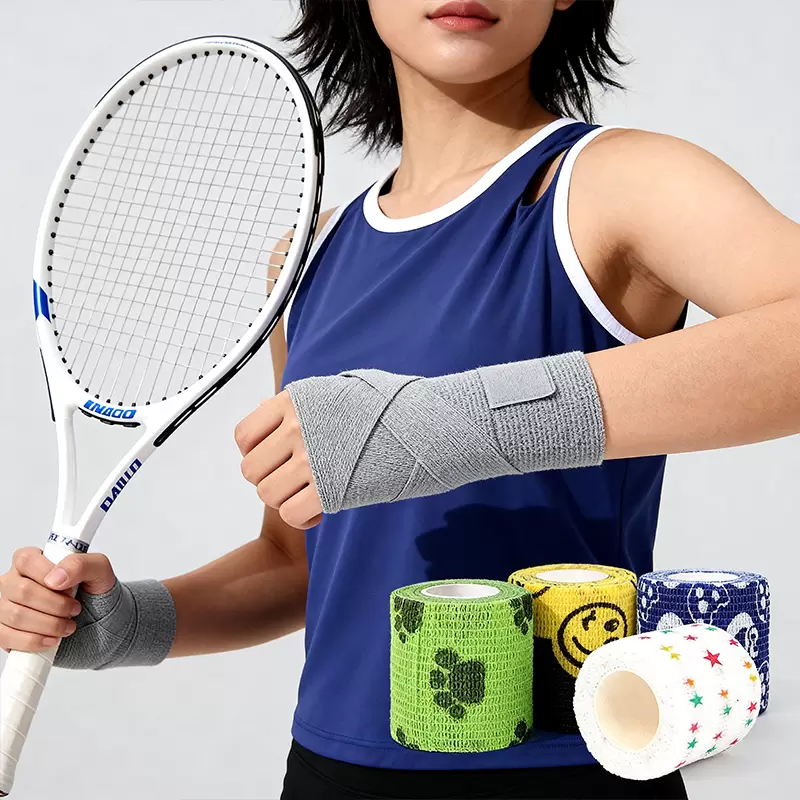
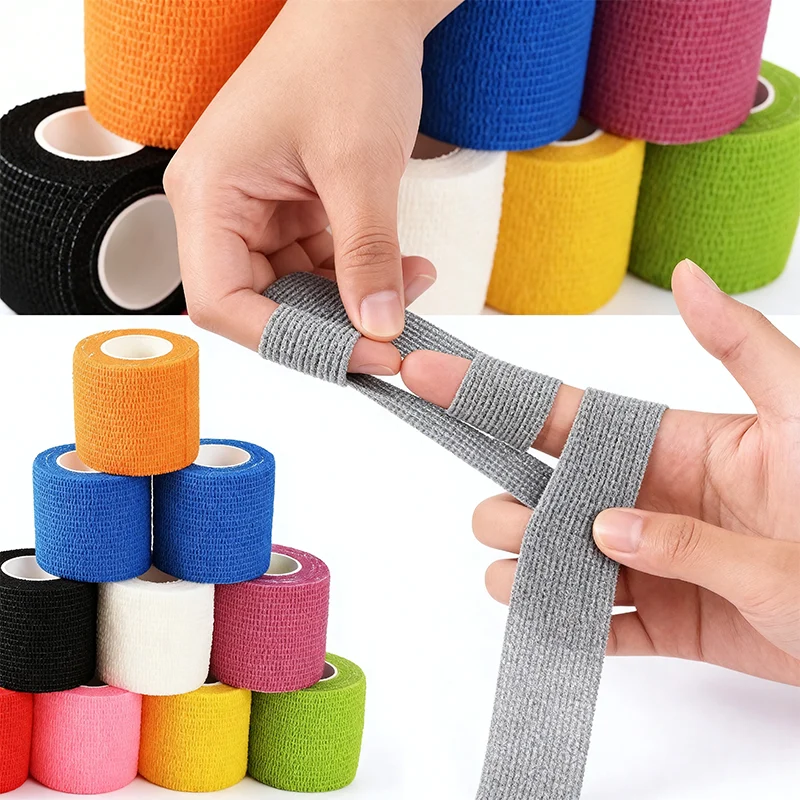
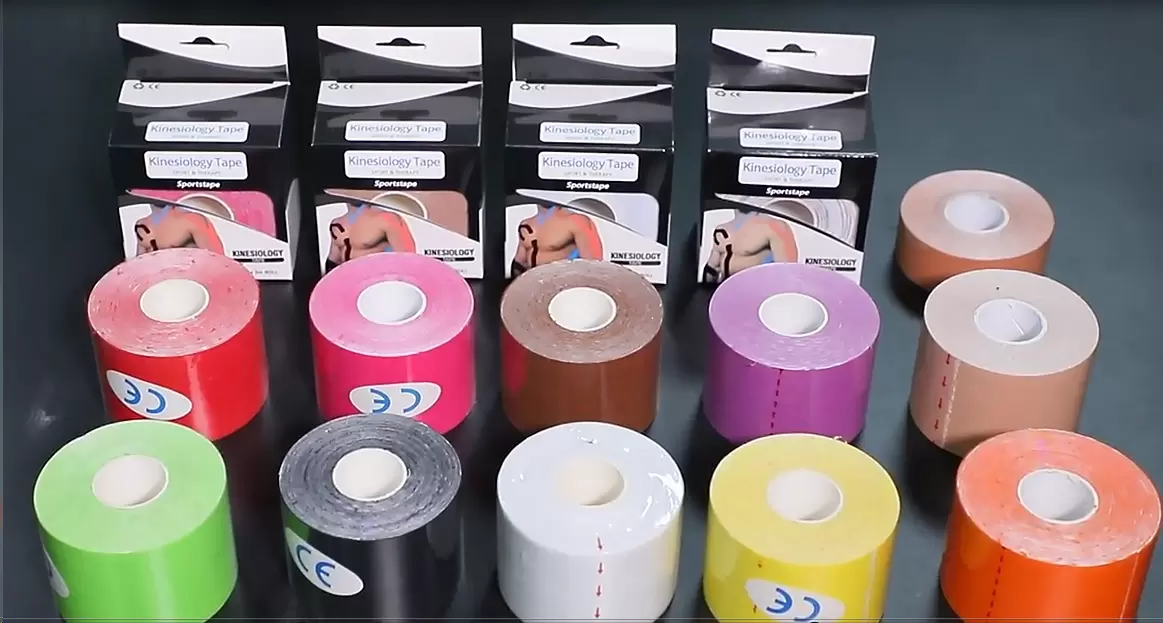
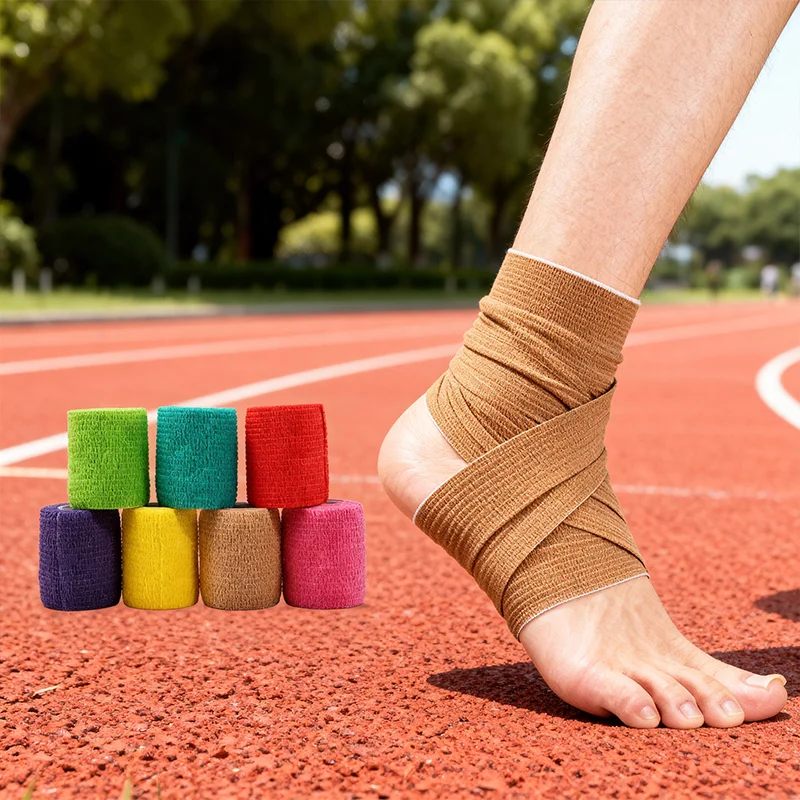
The market for sports adhesive products is becoming more specialized. Instead of offering only traditional athletic tape or general kinesiology tape, many distributors, fitness brands, rehabilitation product companies, and sports retailers are looking for products designed around specific body areas and usage scenarios.
One product category receiving growing attention is waterproof butt lifting tape. This type of elastic adhesive tape is designed for application around the gluteal and hip areas, where users need flexibility, adhesion, and resistance to sweat during movement. For B2B buyers, however, choosing the right product is not simply a matter of finding tape that sticks to the skin. Material construction, stretch performance, adhesive technology, skin contact, roll dimensions, cutting options, packaging, customization, and supply consistency all influence whether a product is suitable for commercial distribution.
For companies developing a sports tape portfolio, a glute-focused kinesiology tape can occupy a different position from conventional athletic tape. It can be marketed toward fitness users, runners, weightlifters, sports clubs, wellness brands, and consumers interested in targeted body-support products.
Xingda New Material has developed Sports Glute Lifting Tape as a kinesiology tape specifically intended for the gluteus maximus, gluteus medius, and hip muscle groups. The product uses elastic sports fabric, bidirectional stretch, medical-grade heat-sensitive acrylate adhesive, and a water- and sweat-resistant adhesive system. The available specifications include 5 cm and 7.5 cm widths with 5 m per roll.
For distributors and private-label brands, these technical details are more important than simply describing a product as “strong tape.” The following guide explains what B2B buyers should evaluate when sourcing a glute lifting tape and how product construction affects real-world use.
Why the Glute Tape Category Is Different from Conventional Sports Tape
Traditional athletic tape is usually associated with rigid support, joint stabilization, or securing equipment. Kinesiology tape follows a different design philosophy. Its elastic structure allows it to move with the body while maintaining contact with the skin.
This difference becomes particularly important when the tape is applied to the gluteal region.
The gluteal area changes shape considerably during squats, lunges, deadlifts, running, jumping, stretching, hip abduction, and rotational movements. A rigid adhesive material may interfere with movement or become uncomfortable when the skin and underlying soft tissue move repeatedly.
An elastic tape can accommodate these changes more effectively.
For B2B buyers, this means that the product should be evaluated according to several performance factors rather than adhesive strength alone:
Elasticity
Recovery force
Conformability
Adhesive consistency
Sweat resistance
Water resistance
Breathability
Edge stability
Skin comfort
Removal characteristics
Roll dimensions
Cutting flexibility
Customization capability
A well-designed waterproof butt lifting tape needs to balance these properties. Excessive adhesive strength can make removal uncomfortable, while insufficient adhesion can cause curling or peeling during exercise. Excessive fabric stiffness can restrict movement, while insufficient structural strength may make cutting and application more difficult.
For commercial products, the goal is therefore controlled performance rather than simply maximizing one individual specification.
What Is Waterproof Butt Lifting Tape?
Waterproof butt lifting tape is an elastic adhesive tape designed for use around the gluteal and hip areas, with an adhesive system intended to maintain contact in environments involving perspiration and moisture.
The term “waterproof” should be interpreted carefully in product development and marketing. For B2B buyers, water resistance, sweat resistance, adhesive retention, and complete waterproof performance are not necessarily identical claims.
A product can be designed to tolerate perspiration and short-term exposure to moisture without necessarily being intended for prolonged underwater use.
Xingda New Material describes its Sports Glute Lifting Tape as having water- and sweat-resistant adhesive performance. The product is designed to maintain adhesion for approximately 8–12 hours under suitable conditions, including high-intensity exercise, outdoor running, and hot yoga, with reduced curling, wrinkling, and peeling during activity.
This distinction matters for B2B marketing.
A distributor should not automatically position every sports tape as suitable for swimming, bathing, or prolonged submersion simply because the adhesive is water resistant. Instead, marketing claims should match validated product performance and the intended application environment.
For fitness and sports applications, sweat resistance can be the more commercially relevant characteristic because users may wear the tape during high-intensity training sessions.
Why Sweat Resistance Matters in Sports Tape
Perspiration is one of the most common causes of adhesive failure during exercise.
When a user performs a demanding workout, the skin temperature rises and sweat accumulates on the surface. If the adhesive system cannot maintain sufficient contact, the tape may begin to lift at the edges.
Once an edge starts peeling, repeated friction from clothing can accelerate the problem.
This is particularly relevant around the gluteal area because sportswear frequently moves against the tape. Tight leggings, compression shorts, training shorts, and other athletic garments can repeatedly contact the tape edges.
A sports tape designed for this application therefore needs to consider:
Skin contact.
Moisture management.
Adhesive coverage.
Fabric elasticity.
Edge construction.
Friction from clothing.
Repetitive movement.
The product specification from Xingda New Material uses a water-wave or dot-matrix adhesive coating that covers approximately 60%–70% of the skin-facing area. The remaining channels help preserve breathability while maintaining adhesive contact.
From a B2B perspective, this type of construction is useful because adhesive performance is not simply determined by putting more adhesive onto the fabric. The coating pattern, adhesive formulation, fabric surface, and application conditions all influence the final result.
Fabric Selection Is a Major Purchasing Factor
The fabric is the structural foundation of kinesiology tape.
A gluteal application requires a material that can stretch in multiple directions while maintaining adequate recovery. If the fabric only stretches along one axis, it may not conform efficiently to the changing geometry of the hip and gluteal area.
Xingda New Material specifies a high-elasticity sports kinesiology fabric based on cotton blended with spandex. The product has bidirectional stretch, with both longitudinal and transverse elongation rates specified at approximately 140%–160%. The fabric is also described as approximately 0.5–0.6 mm thick.
This construction gives buyers several practical advantages.
First, bidirectional stretch helps the tape conform to body movement.
Second, the cotton component can contribute to a familiar textile feel for users.
Third, the spandex component provides elasticity that is useful when the tape needs to accommodate repeated movement.
For distributors, fabric specifications should be included in the technical documentation supplied to downstream customers. Buyers may want to compare fabric composition, thickness, stretch ratio, weight, adhesive type, and liner construction across suppliers.
A clear specification sheet can reduce misunderstandings during sampling and bulk purchasing.
How Bidirectional Stretch Supports Product Performance
The gluteal region is not a flat surface.
During a squat, the hips flex and the gluteal tissues change position. During hip extension, the movement reverses. Running introduces repeated cycles of flexion and extension, while lateral movement introduces abduction and rotation.
A tape that can stretch longitudinally and transversely can adapt to these changes more effectively than a material with limited directional elasticity.
The product page describes the Sports Glute Lifting Tape as capable of conforming during extensive flexion, extension, abduction, and rotational movement.
This is important for B2B buyers because it connects a technical specification—bidirectional stretch—to a practical application benefit.
When evaluating samples, procurement teams should therefore test the tape under movement rather than only checking whether it stretches by hand.
A useful evaluation process can include:
The purpose is not to make medical claims. It is to determine whether the physical tape construction remains comfortable, adherent, and stable during the movement patterns for which the product is intended.
Adhesive Technology: What B2B Buyers Should Examine
The adhesive is arguably the most important functional component after the fabric.
A tape can have excellent elasticity but still perform poorly if the adhesive loses contact with the skin. Conversely, an extremely aggressive adhesive may create difficulties during removal.
Xingda New Material specifies a medical-grade heat-sensitive acrylate adhesive for its Sports Glute Lifting Tape. The product is also described as containing no natural latex, fragrances, or parabens and having undergone skin irritation and sensitization testing.
For B2B buyers, adhesive information should be treated as part of the product specification rather than a marketing afterthought.
Important questions include:
What adhesive chemistry is used?
Is the adhesive latex-free?
What is the coating method?
What is the adhesive coverage ratio?
How does adhesion change with perspiration?
How does adhesion respond to body heat?
How long is typical wear time?
What is the recommended removal process?
Is residue left on the skin?
What skin testing has been performed?
These questions become especially important when a product is being distributed under a private brand.
A distributor needs enough technical information to create accurate product documentation and answer customer questions.
Why Adhesive Coverage Should Not Simply Be Maximized
A common assumption in adhesive product purchasing is that more adhesive means better performance.
That is not always true.
A continuous adhesive layer may provide strong initial bonding, but it can also affect breathability and increase the amount of adhesive in direct contact with the skin.
A patterned adhesive coating can provide a balance between bonding and exposed textile or ventilation channels.
The Sports Glute Lifting Tape uses a water-wave or dot-matrix coating structure covering approximately 60%–70% of the skin surface.
For a sports tape used during prolonged exercise, this design consideration can be commercially relevant.
B2B buyers should assess not only peel strength but also the overall user experience after several hours of wear.
A suitable evaluation should consider:
This provides a much more realistic assessment than a simple “stickiness” test.
Application Scenarios for Glute-Focused Sports Tape
A glute-focused tape can serve multiple market segments.
The most obvious application is fitness training. Squats, deadlifts, lunges, hip thrusts, and other lower-body exercises create repeated movement in the hip and gluteal region.
Running is another relevant scenario. Distance runners may prefer products that remain comfortable during repetitive movement and perspiration.
Outdoor training can create additional challenges because heat, humidity, and sweat can influence adhesive performance.
Hot yoga is another scenario where moisture resistance becomes relevant.
For B2B customers, these applications can be organized into clear market segments rather than being presented as a generic “sports product.”
Potential target customers include:
Fitness equipment brands
Sports tape distributors
Athletic recovery brands
Running accessory companies
Gym and fitness retailers
Sports e-commerce sellers
Physical wellness brands
Sports club suppliers
Personal training businesses
Fitness subscription brands
Private-label sports product companies
Each segment may require a different packaging format and product positioning.
Sports Tape for Fitness Brands
Fitness brands often need products that fit naturally into an existing portfolio.
For example, a company already selling resistance bands, lifting accessories, workout gloves, compression products, or recovery products may consider adding a specialized glute kinesiology tape.
The advantage is product-category compatibility.
The buyer does not necessarily need to establish an entirely new customer base. The tape can be positioned as an additional training accessory.
For this type of customer, packaging and brand presentation can be just as important as the tape itself.
The buyer may request:
The product page indicates that logo customization is available, with an MOQ of more than 1,000 square meters and technical confirmation required before production.
This type of information should be clarified before a commercial order is finalized.
Sports Tape for Distributors
Distributors usually have different requirements from consumer brands.
A distributor may purchase multiple specifications and sell them to different downstream customers.
In this situation, consistency becomes critical.
The distributor should evaluate:
The supplier's production structure also matters.
Dongguan Xingda New Material Technology Co., Ltd. describes itself as operating a complete production chain covering research and development, production, and sales, with adhesive tape products across sports, industrial, and customized applications.
For a distributor, the value of working with a supplier that understands both tape materials and commercial customization is that product development and production communication can be handled through a more integrated process.
How to Evaluate a Waterproof Butt Lifting Tape Sample
Before placing a bulk order, B2B buyers should conduct structured sample testing.
The first test should be a basic visual and dimensional inspection.
Check:
The second test should evaluate elasticity.
Measure the original tape length and compare it with the stretched length under controlled conditions.
For commercial procurement, suppliers should provide a defined test method rather than relying on informal hand stretching.
The third test should evaluate adhesion.
Apply the tape to clean, dry skin according to the recommended procedure and observe:
Initial adhesion
Edge stability
Movement performance
Sweat resistance
Wear duration
Removal behavior
The fourth test should involve movement.
A sample that performs well while standing still may behave differently during exercise.
This is why a B2B product evaluation should include actual movement patterns.
Skin Preparation Is Important for Adhesive Performance
Even a high-quality adhesive tape can fail if the skin is poorly prepared.
Before application, the skin should generally be clean and dry. Oils, lotions, creams, and excessive moisture can interfere with adhesive contact.
For commercial customers, application instructions should therefore be part of the product documentation.
A basic application procedure may include:
Clean the application area.
Ensure the skin is dry.
Cut the tape to the required shape and length.
Round the corners when appropriate.
Apply the tape without unnecessary wrinkles.
Press the adhesive surface onto the skin.
Activate the adhesive through gentle rubbing or pressure according to the supplier's instructions.
Avoid immediately exposing the tape to excessive moisture unless the product instructions allow it.
This is particularly important for a waterproof butt lifting tape because buyers may expect moisture resistance to compensate for poor application. It cannot.
Water-resistant adhesive performance does not eliminate the need for proper skin preparation.
Why Rounded Edges Matter
Tape edges are often overlooked during product development.
However, edges can experience repeated friction from clothing.
When the tape is placed under sports leggings or compression garments, movement can cause fabric-to-tape contact. If the corners are sharp, they may be more likely to catch or lift.
The Sports Glute Lifting Tape product specification describes rounded edge cutting as a method intended to reduce friction with sports shorts or tights and limit edge curling caused by repeated rubbing.
This is a relatively small design detail, but it can have a noticeable effect on user experience.
For B2B product developers, small physical design decisions often determine whether a sports accessory feels premium or generic.
Custom Cutting Options for Commercial Products
Different customers may require different tape shapes.
A professional sports tape distributor may sell rolls that users cut themselves.
A consumer brand may prefer pre-cut pieces that can be applied immediately.
A fitness brand may want a specific shape designed for a particular application technique.
The product specification supports free cutting based on coverage requirements and application methods, including Y-shaped lifting configurations and three-strip fan-shaped radial taping.
For B2B buyers, this opens several product-development routes.
A roll format can reduce packaging complexity and give users flexibility.
Pre-cut formats can improve convenience and provide a more controlled consumer experience.
The correct choice depends on the intended sales channel.
Roll Format vs. Pre-Cut Format
Roll products are often attractive for distributors because they are flexible.
One roll can serve multiple application sizes, and users can cut the material according to their requirements.
Pre-cut products have a different advantage.
They can be packaged as a ready-to-use kit and marketed around a specific application.
For example, a fitness brand might sell a glute tape kit containing several pre-cut strips with illustrated instructions.
This can reduce the learning curve for first-time users.
The appropriate format should therefore be selected based on the target customer rather than simply manufacturing convenience.
Available Product Dimensions
The Sports Glute Lifting Tape is specified in 5 cm and 7.5 cm widths, with a roll length of 5 m and a release liner protecting the adhesive surface.
These dimensions give B2B buyers a useful starting point for product planning.
A narrower width may be suitable for applications requiring more precise placement.
A wider tape can provide greater coverage across larger areas.
However, the final choice should depend on application design, cutting patterns, packaging, and user instructions.
For a brand developing several products, offering multiple widths can also create a clearer product range.
Packaging Considerations for B2B Buyers
Packaging is not simply a visual element.
For sports adhesive products, packaging should protect the adhesive, communicate application instructions, identify specifications, and support storage and transportation.
A commercial package may need to include:
The release liner is particularly important because it protects the adhesive before use.
If the product is being sold through e-commerce, packaging should also be designed to minimize damage during transportation.
A roll that arrives with damaged packaging or exposed adhesive may create avoidable quality complaints.
Storage and Transportation
Adhesive products should be handled as material-sensitive goods.
High temperatures, humidity, direct sunlight, contamination, and improper storage conditions can affect adhesive performance over time.
B2B buyers should therefore ask suppliers for recommended storage conditions and shelf-life information before placing large orders.
This is especially important for international distribution.
A product may travel through multiple logistics environments before reaching the end customer. Proper carton packing, inner packaging, labeling, and warehouse handling can help reduce unnecessary quality risks.
Xingda New Material is based in Dongguan, Guangdong, an established manufacturing and logistics region with access to road and water transportation infrastructure. The company describes its production and logistics system as supporting efficient order fulfillment and global shipment coordination.
For importers, the practical question is not simply where the supplier is located. It is whether the supplier can provide stable production, consistent packing, and reliable shipment preparation.
What Makes a Supplier Suitable for Private-Label Sports Tape?
Private-label buyers should evaluate more than product quality.
The supplier should also be capable of translating a product specification into a repeatable commercial product.
Important questions include:
Can the logo be customized?
Can the packaging be customized?
What is the MOQ?
Can the supplier provide samples?
Can technical specifications be adjusted?
Can different widths be supplied?
Can adhesive requirements be discussed?
Can the supplier support custom release liners?
Can the supplier maintain repeat-order consistency?
How is quality inspected before shipment?
According to the current product information, Xingda New Material supports logo customization and indicates that customers can provide their logo for technical confirmation. The listed MOQ for logo customization is more than 1,000 square meters.
These requirements should be confirmed for each specific project because customization parameters can vary according to artwork, material, printing method, packaging, and order volume.
Why Material Customization Matters
Not every market needs exactly the same tape.
A professional sports brand may prioritize elasticity and sweat resistance.
A rehabilitation-focused company may prioritize skin comfort and controlled adhesion.
A fashion-oriented brand may place greater emphasis on appearance and packaging.
A distributor may prioritize standardized dimensions and stable supply.
This is why material customization can be commercially valuable.
A supplier with experience in adhesive tapes can discuss fabric composition, adhesive selection, coating pattern, liner material, roll size, and other parameters rather than treating every order as an identical commodity.
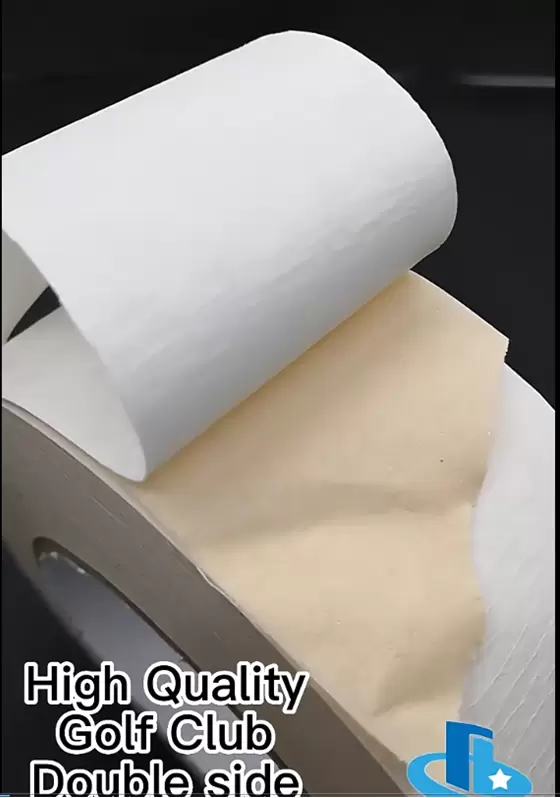
Xingda New Material's broader product range includes sports tape, kinesiology tape, athletic tape, sport bandage, duct tape, cloth-based adhesive tape, fiber mesh double-sided adhesive tape, kraft paper adhesive tape, golf grip double-sided adhesive tape, and customized special adhesive tapes.
This broader adhesive-tape background can be relevant when a customer needs a sports tape solution with additional material or coating requirements.
Common Mistakes When Buying Glute Tape in Bulk
One of the most common purchasing mistakes is choosing based only on price.
A lower unit cost can become expensive if the tape has inconsistent adhesion, variable stretch, poor packaging, or high complaint rates.
Another mistake is testing only the adhesive.
The fabric, liner, coating pattern, and cutting quality all influence product performance.
A third mistake is failing to define the intended application.
A tape intended for casual fitness use may have different requirements from a product intended for high-intensity training.
A fourth mistake is making unsupported marketing claims.
For example, buyers should avoid describing a product as completely waterproof, medically therapeutic, or suitable for every skin type unless those claims are specifically supported by appropriate testing and regulatory documentation.
A fifth mistake is ignoring packaging.
Even a well-engineered tape can perform poorly commercially if the consumer cannot understand how to apply it.
How to Compare Different Suppliers
A practical supplier comparison can use a scoring system.
For example:
| Evaluation Area | Key Questions |
|---|
| Fabric | What material is used? What is the stretch ratio? |
| Adhesive | What adhesive type is used? How is it coated? |
| Moisture resistance | How does adhesion perform with sweat and moisture? |
| Dimensions | What widths and roll lengths are available? |
| Skin contact | Is latex used? What testing is available? |
| Customization | Can logo, liner, packaging, and dimensions be customized? |
| MOQ | What is the minimum order quantity for standard and custom products? |
| Quality control | How are incoming materials and finished rolls inspected? |
| Samples | Can buyers test before bulk purchasing? |
| Logistics | How are rolls packed and prepared for international shipment? |
| Repeat orders | Can the supplier maintain specification consistency? |
This approach allows procurement teams to compare suppliers using measurable criteria rather than vague statements such as “high quality.”
Building a Product Specification Sheet
A professional B2B product page should make it easy for buyers to understand the product.
A useful specification sheet for glute kinesiology tape can include:
Product Type: Glute kinesiology tape
Primary Application: Gluteal and hip area
Fabric: Cotton and spandex elastic sports fabric
Stretch: Bidirectional
Elongation: Approximately 140%–160% longitudinal and transverse
Thickness: Approximately 0.5–0.6 mm
Adhesive: Medical-grade heat-sensitive acrylate
Adhesive Coating: Water-wave or dot-matrix pattern
Adhesive Coverage: Approximately 60%–70%
Latex: No natural latex specified
Available Widths: 5 cm and 7.5 cm
Roll Length: 5 m
Liner: Release liner
Moisture Resistance: Water- and sweat-resistant
Typical Wear Performance: Approximately 8–12 hours under suitable conditions
Customization: Logo and other custom options subject to technical confirmation
The exact technical data should always be confirmed with the supplier before publication or commercial quotation, especially if the specification is being used in regulatory, packaging, or contractual documents.
B2B Application: Fitness Retail
Fitness retailers can position glute tape as a complementary accessory to lower-body training products.
For example, a retailer selling resistance bands can create a product bundle containing:
The advantage is that the tape does not need to compete directly with the retailer's main product.
Instead, it becomes part of a broader lower-body training category.
This type of merchandising can be particularly suitable for online stores because the product is lightweight, compact, and relatively easy to ship.
B2B Application: Running Brands
Running brands have a different product story.
Runners are exposed to repetitive movement, perspiration, long-duration activity, and friction from sportswear.
A specialized glute and hip tape can therefore be positioned as part of a broader sports-support accessory portfolio.
The key is to communicate the product's physical characteristics accurately.
Instead of making exaggerated claims, marketing materials can focus on:
This approach is more appropriate for a technical B2B product category.
B2B Application: Gym and Training Businesses
Gyms and personal training businesses can also become potential bulk buyers.
A gym may use sports tape as an accessory sold through its reception area or online store.
A training company may include tape in a fitness kit.
A personal trainer may recommend a specific product to clients.
For these customers, packaging and ease of use become important.
The product should be easy to identify, easy to store, and easy to explain.
A supplier that can support customized packaging may therefore provide additional value beyond supplying the raw tape.
The Role of Product Instructions
Good instructions can reduce customer complaints.
A user may believe that a tape has poor adhesion when the actual problem is that the skin contained lotion or moisture before application.
Similarly, a user may experience premature edge lifting because the tape was not rubbed down adequately after application.
B2B brands should therefore consider including:
The product page recommends moistening tape edges with a small amount of baby oil or body wash and removing the tape slowly in the direction of the muscle fibers to reduce pulling on hair and the stratum corneum.
For consumer packaging, the exact instructions should be reviewed and adapted to the final product configuration.
Removal Performance Is Part of Product Quality
Adhesion is only half of the user experience.
Removal matters too.
A tape that stays firmly attached during exercise but causes excessive discomfort during removal may generate poor customer feedback.
The adhesive must therefore balance retention with controlled debonding.
For B2B buyers, removal testing should be included in the sample evaluation process.
Test the product after different wear durations and observe:
Edge lifting
Adhesive residue
Skin pulling
Hair pulling
Ease of peeling
Surface irritation
These observations can be documented alongside adhesion results.
Why a Complete Production Chain Matters
For adhesive products, supply consistency depends on more than final assembly.
Fabric preparation, adhesive coating, curing or processing conditions, slitting, rewinding, cutting, release liner handling, printing, and packaging can all influence the final product.
A supplier with an integrated production chain can potentially coordinate these processes more efficiently.
Dongguan Xingda New Material Technology Co., Ltd. states that its business covers research and development, production, and sales across a broad range of adhesive tape products.
For B2B customers, this can be relevant when developing a new product because the discussion can move beyond simply selecting an existing stock item.
Instead, buyers can discuss the required application, material, dimensions, adhesive behavior, and branding requirements as part of one project.
Custom Logo and Branding
For many B2B customers, the ability to add a brand identity is essential.
A generic roll may be suitable for wholesale distribution, but a private-label sports brand usually needs its own visual identity.
Logo customization can be applied to the tape itself where technically suitable, while packaging can provide another branding layer.
Before approving artwork, buyers should confirm:
The product page confirms that logo customization is available subject to technical confirmation and specifies an MOQ above 1,000 square meters for this option.
Because printing requirements can affect production cost and lead time, these details should be finalized during the sampling stage.
What Information Should Buyers Send When Requesting a Quote?
A vague inquiry such as “Please quote waterproof butt lifting tape” may not provide enough information for an accurate commercial quotation.
A better B2B inquiry should include:
1. Product type
Glute kinesiology tape or another specific sports tape format.
2. Dimensions
For example, 5 cm or 7.5 cm width and required roll length.
3. Material
Whether the standard cotton-spandex construction is acceptable or a customized material is required.
4. Adhesive
Standard adhesive or a specified adhesive requirement.
5. Branding
Logo printing, custom packaging, or unbranded supply.
6. Quantity
Estimated sample quantity, trial order quantity, and expected annual volume if available.
7. Target market
Country or region where the product will be sold.
8. Packaging
Individual roll, multi-roll pack, retail box, pouch, or other configuration.
9. Application
Fitness, running, gym retail, sports distribution, or another use case.
10. Required documents
Any technical specifications, test reports, or documentation needed for the target market.
The more complete the initial specification, the easier it is for a supplier to provide a meaningful quotation and sample recommendation.
Quality Control Points for Bulk Production
Once a sample has been approved, quality control should focus on maintaining the same specifications throughout the production run.
Typical inspection points include:
Raw Material Inspection
Check fabric composition, elasticity, surface condition, and incoming adhesive materials.
Coating Inspection
Check adhesive uniformity, coating pattern, and coverage.
Slitting Inspection
Check width, edge quality, and roll winding.
Finished Roll Inspection
Check length, appearance, liner condition, and packaging.
Adhesion Testing
Evaluate bonding performance using the supplier's established test method.
Elasticity Testing
Verify that the fabric remains within the agreed stretch specification.
Packaging Inspection
Check labels, artwork, quantities, cartons, and shipment markings.
A documented quality-control process helps prevent small production variations from becoming large customer complaints.
How to Build a Long-Term Supply Relationship
For B2B customers, the first order is only the beginning.
A successful sports tape program requires consistency across repeat orders.
The supplier should maintain agreed specifications for:
Fabric composition
Tape dimensions
Stretch performance
Adhesive system
Coating pattern
Liner
Printing
Packaging
If any material or process is changed, the buyer should be informed and, where appropriate, receive a new sample for approval.
This is especially important for private-label products because the end customer expects every reorder to perform like the previous batch.
When Should a Buyer Choose Custom Tape Instead of Standard Tape?
Custom development makes sense when the standard product does not match a commercial requirement.
Examples include:
A unique tape width
A special roll length
A specific fabric composition
A different adhesive requirement
Custom logo printing
Custom release liner
Pre-cut shapes
Special packaging
A particular application pattern
However, customization should not be pursued simply because it is available.
Every custom feature can affect MOQ, development time, production complexity, and quality control.
For many new brands, starting with a standard specification and validating market demand may be more efficient.
After the product gains traction, the buyer can consider deeper customization.
Waterproof Butt Lifting Tape and Product Positioning
The keyword waterproof butt lifting tape is useful for search visibility, but B2B product positioning should go beyond the keyword itself.
Procurement professionals are looking for technical information.
They want to know what the product is made from, how it performs, what sizes are available, whether it can be customized, how much can be ordered, and whether the supplier can support repeat orders.
A strong B2B product page should therefore combine commercial and technical information.
A useful structure can include:
Product overview
Technical specifications
Material information
Adhesive technology
Application scenarios
Customization options
Packaging
Quality control
Sample process
FAQ
Quote request
This structure is also useful for search-engine visibility because it creates clear topical coverage around the main keyword and related search terms.
Related Search Terms Buyers May Use
Businesses searching for this category may use different terminology depending on their market.
Relevant terms can include:
Glute kinesiology tape
Glute lifting tape
Sports glute tape
Butt lifting tape
Sweat-resistant body tape
Elastic sports adhesive tape
Glute support tape
Fitness kinesiology tape
Custom sports tape
Private-label kinesiology tape
Wholesale sports tape
Sports adhesive tape supplier
These terms should be used naturally.
Keyword repetition should never replace useful technical information.
For Google search visibility, the most valuable content is usually content that clearly answers the buyer's questions and provides original, useful information.
SEO Considerations for a B2B Sports Tape Article
A B2B article targeting waterproof butt lifting tape should avoid keyword stuffing.
The primary keyword can appear in the H1, introduction, selected subheadings, body paragraphs, and conclusion.
Secondary terms can be distributed naturally throughout sections discussing:
Fabric
Adhesive
Sweat resistance
Applications
Customization
Wholesale purchasing
Product testing
Packaging
Quality control
The article should also use descriptive headings.
Search engines can better understand the topic when headings reflect real buyer questions rather than repetitive keyword variations.
For example, “How to Evaluate a Waterproof Butt Lifting Tape Sample” communicates a clear search intent and provides useful information to procurement professionals.
Why Practical Content Performs Better for B2B Buyers
B2B buyers are rarely interested in promotional language alone.
They want information that helps them make a purchasing decision.
A useful article should answer questions such as:
What material is used?
How much can the tape stretch?
Will it stay attached during exercise?
Is it suitable for sweaty conditions?
What sizes are available?
Can it be branded?
What is the MOQ?
Can samples be tested?
How should it be applied?
How should it be removed?
What quality controls are available?
This type of information has practical commercial value.
It also helps establish the supplier as a knowledgeable participant in the adhesive tape industry rather than simply another seller listing a product.
Choosing the Right Tape Width
Width selection should be based on the intended application and cutting method.
The 5 cm and 7.5 cm options offered for the Sports Glute Lifting Tape provide different coverage possibilities.
A narrower tape may be convenient for more targeted applications.
A wider tape can provide greater surface coverage and may reduce the number of strips required for certain application patterns.
For wholesale customers, offering both options can make it easier to serve different end-user preferences.
However, the correct specification should always be confirmed through sample testing before commercial production.
The Importance of the Release Liner
The release liner protects the adhesive before application.
It also makes the tape easier to handle during cutting, storage, packaging, and application.
The Sports Glute Lifting Tape uses a release liner, and the product information indicates that the liner can be customized subject to MOQ requirements.
For private-label buyers, the liner can therefore be considered part of the product design rather than simply a disposable backing material.
Printed liners can potentially provide:
Application guidance
Cutting marks
Brand information
Product identification
Usage instructions
Whether such customization is appropriate depends on the final product concept and order volume.
Questions B2B Buyers Should Ask Before Ordering
Before approving a supplier, procurement teams should ask for clear answers to the following:
What is the exact fabric composition?
Confirm the percentage of cotton, spandex, or other fibers.
What is the stretch range?
Ask for the testing method as well as the numerical result.
What adhesive is used?
Confirm the adhesive type and whether the formulation is latex-free if required.
What is the coating pattern?
Understand whether the adhesive is full-coated, dot-coated, wave-coated, or another configuration.
What is the expected wear duration?
Clarify the conditions under which the stated duration applies.
How does the tape perform with sweat?
Ask for supporting test information where available.
What widths and lengths are available?
Confirm standard and custom specifications.
Can the product be branded?
Ask about logo printing, packaging, liner printing, and MOQ.
Can samples be tested before bulk production?
A sample should be evaluated under realistic conditions.
How is repeat-order consistency controlled?
This is especially important for long-term distribution.
Final Considerations for Importers and Distributors
The growing interest in specialized sports adhesive products creates opportunities for companies that can combine technical product quality with reliable supply.
A glute-focused kinesiology tape should not be treated as simply another generic adhesive roll.
The product needs to perform in a demanding environment where the skin moves, muscles change position, clothing creates friction, and perspiration can affect adhesion.
For this reason, B2B buyers should examine the entire product system:
Fabric + elasticity + adhesive + coating + liner + edge design + dimensions + packaging + quality control.
A product such as Xingda New Material's Sports Glute Lifting Tape combines cotton-spandex elastic fabric, bidirectional stretch, medical-grade heat-sensitive acrylate adhesive, patterned adhesive coating, moisture resistance, and multiple width options. The product is designed for applications involving gluteal and hip movement and can be customized for commercial projects subject to technical and MOQ requirements.
For brands, distributors, and sports product companies, this provides a practical starting point for developing a specialized tape product.
The most effective sourcing strategy is to begin with a clearly defined application, request a technical sample, test adhesion and elasticity under realistic exercise conditions, confirm packaging and customization requirements, and only then move to bulk production.
Conclusion
The market for waterproof butt lifting tape sits at the intersection of sports accessories, kinesiology tape, fitness products, and specialized adhesive materials. For B2B buyers, the commercial potential of this category depends on more than the appearance of the finished roll.
Material selection, bidirectional elasticity, adhesive formulation, coating structure, moisture resistance, edge stability, skin contact, roll dimensions, packaging, and customization all contribute to the final product.
For a supplier, the ability to support these requirements consistently is just as important as producing an attractive sample.
For a distributor or brand, the right sourcing process starts with understanding the end application. A tape intended for high-intensity fitness training should be evaluated under movement and perspiration. A private-label product should be assessed for branding and packaging requirements. A wholesale product should be evaluated for consistency, logistics, and repeat-order capability.
Xingda New Material provides a range of adhesive tape products and supports customized sports tape solutions, making it a potential partner for businesses developing specialized kinesiology and sports adhesive products.
If your company is evaluating a glute kinesiology tape for wholesale distribution, private-label sports products, fitness retail, or a new sports accessory line, the most practical next step is to define the required tape width, roll length, adhesive performance, branding, packaging, and expected order quantity before requesting samples and a commercial quotation.