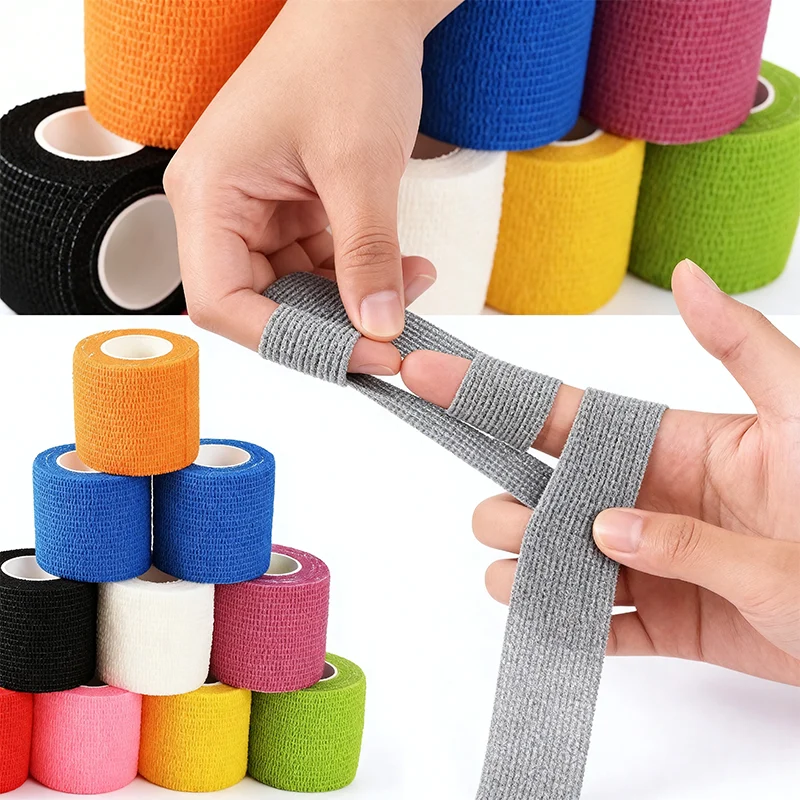
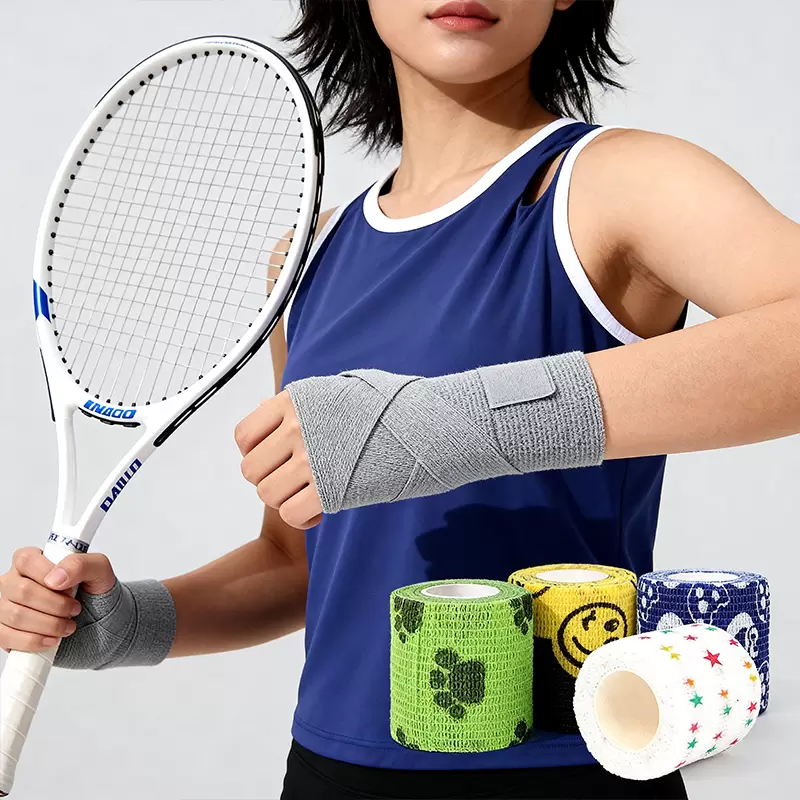
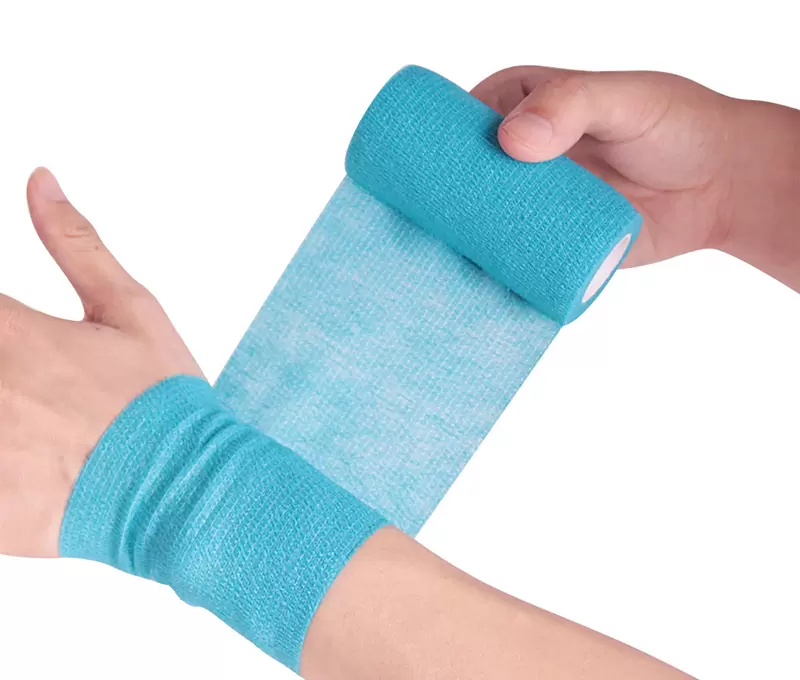
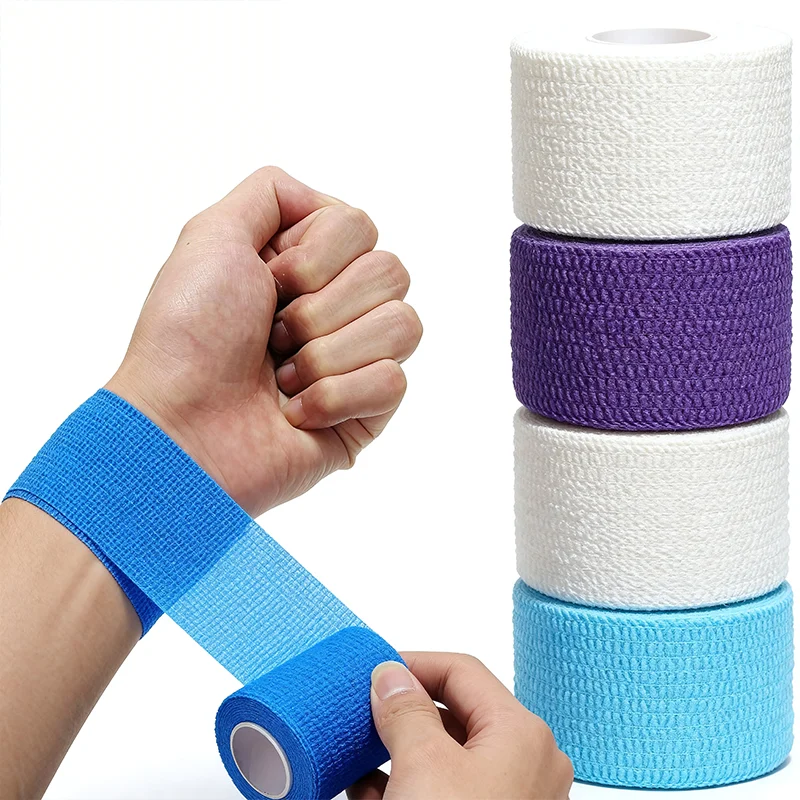
For brands selling beauty, fashion, shapewear, lingerie, swimwear, and event-wear products, breast tape has become a practical alternative to traditional bras in situations where conventional support is difficult to use. Backless dresses, strapless tops, low-cut garments, stage costumes, wedding dresses, and fitted clothing often require discreet support without visible bra straps or bands.
For buyers, however, selecting breast tape is not simply a matter of finding an adhesive product with strong tack. A commercial breast tape needs to balance adhesion, flexibility, comfort, release performance, backing material, converting quality, packaging, and production consistency. The right material for one application may be unsuitable for another.
This is why the choice of a cosmetic breast tape manufacturer deserves the same level of attention as the selection of other specialized adhesive materials. B2B buyers need a supplier that understands not only adhesive performance but also converting, packaging, quality control, customization, and supply requirements.
Xingda New Material focuses on adhesive tape development, production, and sales, with experience across sports tape, kinesiology tape, athletic tape, sport bandage, duct tape, cloth-based adhesive tape, double-sided adhesive materials, kraft paper adhesive tape, golf grip double-sided adhesive tape, and customized adhesive solutions. This broader adhesive background is particularly relevant when developing cosmetic tapes because many of the technical considerations—such as adhesive selection, backing construction, coating, slitting, and application performance—must work together.
What Is Cosmetic Breast Tape?
Cosmetic breast tape is an adhesive tape designed for temporary garment and body-support applications. Depending on the construction, it can be used to help position or support the breast area while allowing the wearer to use clothing without conventional bra straps or visible support structures.
The product may be supplied as continuous rolls, pre-cut strips, individual pieces, or customized shapes. Different designs can target different use cases. A consumer wearing a backless evening dress may require a different tape construction from a performer wearing a costume for several hours or a retailer selling disposable fashion-support kits.
The term "breast tape" covers a relatively broad category. Products can differ in:
Backing material
Adhesive formulation
Thickness
Width
Length
Stretchability
Surface texture
Release liner
Roll structure
Cutting format
Packaging format
Color
Print options
Adhesion level
Flexibility
Removal characteristics
For B2B procurement, these variables matter because they influence not only the user experience but also manufacturing cost, packaging efficiency, product positioning, and return rates.
A buyer should therefore avoid evaluating a product solely according to a single specification such as adhesive strength. The overall tape construction is what determines whether the product is appropriate for its intended application.
Why the Manufacturer Matters
A tape converter can purchase adhesive materials and turn them into finished rolls, but specialized cosmetic tape often requires more than simple cutting and rewinding.
The adhesive needs to be compatible with the intended application. The backing needs to provide the necessary balance between flexibility and dimensional stability. The release liner needs to protect the adhesive during storage and handling while allowing practical removal. The finished product needs to maintain consistent dimensions throughout production.
For a B2B buyer, these requirements become even more important when ordering larger volumes.
A product that performs well in a small sample can behave differently when produced in large quantities if coating thickness, adhesive distribution, lamination, curing, slitting, or winding conditions are not properly controlled.
Working with an experienced cosmetic breast tape manufacturer can therefore reduce the gap between sample performance and mass-production performance.
The manufacturer should be able to discuss the entire product structure rather than simply quote a price per roll. A useful technical conversation should cover the intended application, garment type, expected wearing environment, desired flexibility, adhesive requirements, packaging format, roll dimensions, and target market.
Key Materials Used in Breast Tape
Material selection is one of the first technical decisions in product development.
There is no universal backing material that is ideal for every breast tape application. Different substrates provide different combinations of flexibility, strength, breathability, conformability, and appearance.
Cotton-Based Backing
Cotton-based adhesive tapes are commonly considered when softness and flexibility are important. The textile structure can provide a more fabric-like feel than rigid film-based constructions.
For products positioned toward everyday fashion use, the tactile characteristics of the backing can be important. However, the final performance depends on the complete construction rather than the backing alone.
Cotton or fabric substrates can also be useful where controlled stretch is required. The amount and direction of stretch should be evaluated during product development because excessive elongation may affect handling, application, and support characteristics.
Nonwoven Backing
Nonwoven materials can provide a different balance of softness, flexibility, and cost. They can be suitable for disposable applications where manufacturers need to achieve consistent converting performance while keeping the finished product lightweight.
Nonwoven substrates can also be engineered in different weights and structures, allowing buyers to select a construction according to the requirements of the finished tape.
Film-Based Backing
Film-based tapes can offer smooth surfaces, dimensional stability, and a clean appearance. They may be considered for specific cosmetic or fashion applications where a thin and discreet construction is required.
However, a film that is too rigid may not conform comfortably to movement. Therefore, flexibility and elongation should be evaluated alongside adhesive performance.
Elastic Materials
Elastic backing materials are useful when the tape needs to accommodate body movement. During application, the material may need to conform to curved surfaces rather than remain completely flat.
For this reason, elasticity should be evaluated in practical use rather than by looking at elongation figures alone.
A tape with excessive elasticity can be difficult to position accurately, while a tape with insufficient elasticity may feel restrictive or fail to conform properly to movement.
Adhesive Selection Is More Than "Strong Adhesion"
One of the most common mistakes in adhesive tape procurement is assuming that stronger adhesion automatically means a better product.
For cosmetic applications, this is not necessarily true.
A tape may need sufficient adhesion to remain in position during normal wear, but it also needs to provide practical removal characteristics. Excessive adhesion can create an uncomfortable user experience and increase the risk of residue or skin irritation.
The adhesive should therefore be evaluated as part of the complete application system.
Important considerations include:
A reliable manufacturer should be able to explain how these factors are controlled and tested.
For private-label and customized products, buyers should also ask whether the supplier can adjust adhesive characteristics according to the intended application rather than offering only one standard formula.
Skin Contact Requires a Different Approach
Cosmetic breast tape is different from many industrial adhesive tapes because the product may come into direct contact with human skin.
This creates additional considerations for product development and quality control.
A tape intended for skin-contact applications should not simply use an adhesive originally developed for packaging, duct tape, or general industrial bonding without appropriate evaluation.
The manufacturer and buyer should establish the intended use conditions and determine what material and product testing is appropriate for the target market.
Factors such as wearing duration, environmental conditions, application method, removal method, and individual skin sensitivity can influence the user's experience.
B2B buyers should also be careful with marketing language. A supplier should provide appropriate technical documentation and test information rather than making broad claims that cannot be supported.
For brands entering the cosmetic tape market, responsible product development is more valuable than aggressive marketing claims. Clear instructions, appropriate warnings, material information, and realistic usage guidance can contribute significantly to customer satisfaction.
What Should Buyers Ask a Breast Tape Supplier?
Before placing a commercial order, procurement teams should prepare a structured list of questions.
A supplier evaluation can include the following areas.
1. What Is the Tape Construction?
Ask for details about the backing, adhesive, release liner, and overall thickness.
This helps buyers compare suppliers on a like-for-like basis. Two products may both be described as "breast tape" while having completely different constructions.
2. What Adhesive System Is Used?
The supplier should be able to provide relevant technical information about the adhesive system and its intended application.
The goal is not simply to find the strongest adhesive. The objective is to achieve an appropriate balance between adhesion, flexibility, comfort, and removal.
3. Can Samples Be Provided?
Sample testing is essential.
B2B buyers should evaluate the tape with actual garments and realistic application methods whenever possible. Testing only on a smooth laboratory surface may not represent real-world use.
4. Can Dimensions Be Customized?
Different markets may require different widths, roll lengths, or pre-cut shapes.
A manufacturer capable of customized slitting and converting can help brands create product formats that fit their packaging and sales strategy.
5. Can Packaging Be Customized?
Packaging is particularly important for cosmetic products because the package often communicates the product's intended use and positioning.
Possible formats include individual sachets, paper-backed packs, rolls, kits, or retail boxes.
6. What Quality-Control Procedures Are Used?
Buyers should ask how incoming materials, coating, slitting, winding, packaging, and finished products are inspected.
A consistent quality-control system is particularly important when a product is sold under a private label.
Why Converting Capability Matters
Adhesive tape manufacturing does not end when the adhesive is coated.
Converting determines how the material becomes a usable commercial product.
For breast tape, converting may include:
The quality of these processes can directly affect the customer experience.
For example, uneven slitting can create inconsistent roll edges. Poor winding can cause telescoping or unwinding problems. Inaccurate die cutting can produce pieces that are difficult to separate from the liner. Inconsistent packaging can increase production defects.
This is why a B2B customer should evaluate the manufacturer's converting capabilities in addition to adhesive formulation.
Roll Tape vs. Pre-Cut Breast Tape
The choice between roll tape and pre-cut pieces depends heavily on the target market.
Roll Format
Rolls provide flexibility because the user can cut the required length or shape. They can also be efficient for certain packaging formats and high-volume applications.
However, roll products may require clearer instructions because consumers need to determine the appropriate length and application method themselves.
Pre-Cut Format
Pre-cut pieces offer greater convenience.
They can be designed into specific shapes for different application methods and can be packaged as individual pieces or kits.
For retail brands, pre-cut products can also make the consumer experience easier to understand.
The drawback is that pre-cut products may require additional tooling and converting processes. The packaging footprint may also be different from that of a conventional roll.
A capable manufacturer should be able to discuss both options and help determine which format matches the buyer's sales model.
Customization for Private-Label Brands
Many B2B buyers are not looking for a generic tape. They need a product that fits an existing brand portfolio.
Customization can take place at several levels.
Product-Level Customization
This can include:
Tape width
Roll length
Thickness
Backing material
Adhesive characteristics
Color
Release liner
Pre-cut shape
Packaging-Level Customization
Packaging can include:
Brand identity
Product name
Instructions
Label information
Individual packs
Retail boxes
Multi-piece kits
Carton configurations
Specification-Level Customization
Some buyers may need specific product specifications for their distribution channels.
For example, an online retailer may prefer compact individual packaging, while a beauty distributor may require a multi-piece retail kit.
The ability to customize the product around these requirements can make the supply relationship more useful than simply purchasing a standard tape.
Breast Tape for Different Commercial Markets
The same basic adhesive tape category can serve several B2B markets.
Fashion Brands
Fashion companies may use breast-support tape as an accessory for garments with unusual necklines, open backs, or strapless designs.
For these customers, appearance, discreet packaging, and ease of use can be particularly important.
Lingerie Brands
Lingerie companies may include cosmetic adhesive tape as part of a broader product range.
Consistency is important because customers may compare the tape with other support products sold under the same brand.
Wedding and Bridal Suppliers
Bridal wear frequently includes strapless or low-back garments. Wedding accessory suppliers may therefore have demand for discreet adhesive support products.
Packaging is especially relevant in this market because the product may be purchased as part of a complete event-preparation kit.
Costume and Performance Suppliers
Stage performers and costume users can have different requirements because clothing may involve movement, long periods of wear, and complex garment structures.
In this segment, flexibility and application convenience should be carefully evaluated.
Beauty and Personal-Care Distributors
Beauty distributors may prefer compact, individually packaged products that fit existing retail displays or online fulfillment systems.
For these customers, packaging dimensions and product instructions can be as important as the tape itself.
E-Commerce Brands
Online brands need products that are easy to explain through product pages, images, videos, and instructions.
A supplier that can provide consistent specifications and packaging options can make it easier for an e-commerce brand to maintain product information across different sales channels.
Testing a Cosmetic Breast Tape Before Mass Production
A sample evaluation should be more systematic than simply applying the tape once.
A practical B2B evaluation can include several stages.
Application Test
Check how easily the tape can be applied and positioned.
Look for issues such as premature adhesion, difficult repositioning, excessive stretch, or liner removal problems.
Conformability Test
Apply the tape to the intended application area and evaluate how it behaves on curved surfaces.
The tape should be assessed during normal movement rather than only while stationary.
Adhesion Test
Evaluate whether the tape maintains its intended position during the expected usage period.
Testing conditions should be recorded because temperature, humidity, perspiration, and movement can influence adhesive performance.
Removal Test
Removal is just as important as application.
Check whether the tape can be removed in a controlled manner and whether excessive adhesive residue remains on the skin or garment.
Garment Compatibility Test
If the product is designed for use with specific garments, test representative fabrics.
Different textile surfaces can interact differently with adhesives.
A product that performs well on one fabric should not automatically be assumed to perform identically on satin, polyester, cotton, lace, synthetic blends, or coated materials.
Packaging Test
Packaging should also be evaluated.
Check whether the adhesive remains protected during transportation and storage, whether the release liner stays attached correctly, and whether the package can withstand normal handling.
Adhesive Tape Storage and Shelf-Life Considerations
Adhesive products are sensitive to storage conditions.
Heat, humidity, direct sunlight, dust, and inappropriate packaging can affect tape performance over time.
B2B buyers should discuss recommended storage conditions with the supplier and consider how products will be transported and stored throughout the distribution chain.
This becomes particularly important for international orders.
A product may leave the supplier's warehouse under suitable conditions but then spend weeks in transportation, customs, distribution centers, or retail warehouses.
Packaging should therefore provide reasonable protection against the expected supply-chain environment.
A manufacturer with experience in international shipments can help buyers understand the practical requirements for packaging and transportation.
Why Production Consistency Matters in B2B Orders
A consumer may purchase one package of breast tape, but a distributor or brand may purchase thousands of rolls or pieces.
At that scale, consistency becomes a commercial issue.
A variation in adhesive coating can produce noticeable differences between batches. Differences in backing material can affect stretch and handling. Slitting variation can affect finished roll width. Packaging errors can create incorrect product quantities.
For this reason, buyers should ask how the manufacturer controls production batches.
Useful questions include:
Is each production batch traceable?
Are incoming materials inspected?
Is adhesive coating monitored?
Are finished dimensions checked?
Are rolls inspected after rewinding?
Is packaging checked before shipment?
Can batch samples be retained?
How are nonconforming products handled?
These questions help distinguish a supplier that simply sells adhesive tape from a supplier that operates a structured production system.
The Value of an Integrated Production Chain
An integrated production chain can simplify communication between material selection, coating, converting, packaging, and shipping.
For buyers, this can reduce the number of separate suppliers involved in product development.
Instead of discussing the adhesive with one company, backing with another, cutting with a third party, and packaging with a fourth, a more integrated supplier can coordinate multiple stages of the process.
This is especially useful for customized projects.
If the customer changes the tape width, for example, the change may affect slitting, winding, packaging dimensions, and carton configuration. Having these processes coordinated within one production system can make revisions easier to manage.
Xingda New Material operates across adhesive tape research and development, production, and sales, with a product portfolio covering both general-purpose and specialized adhesive applications. This broader production experience supports the development of customized tape solutions rather than limiting buyers to a single standard specification.
How to Compare Different Manufacturers
When comparing suppliers, B2B buyers should avoid making the decision entirely on unit price.
A better approach is to evaluate the total supply package.
Consider the following categories:
| Evaluation Area | Questions to Consider |
|---|
| Product structure | Does the tape construction match the intended application? |
| Adhesive | Is adhesion appropriate for the intended use? |
| Backing | Is the material flexible and suitable for the application? |
| Converting | Can the supplier produce the required roll or cut format? |
| Customization | Can dimensions and packaging be customized? |
| Quality control | Are production batches consistently monitored? |
| Documentation | Can relevant technical information be provided? |
| Packaging | Is the product protected during storage and shipping? |
| Production capacity | Can the supplier support repeat orders? |
| Logistics | Can finished products be shipped efficiently? |
| Communication | Can technical requirements be discussed clearly? |
| Product development | Can the supplier support specification changes? |
This approach provides a more realistic picture of supplier suitability.
A low initial price does not necessarily mean a lower total procurement cost if the product generates excessive defects, inconsistent batches, packaging problems, or customer complaints.
Questions About Minimum Order Quantities
Minimum order quantity is another important issue when sourcing cosmetic adhesive tape.
Large brands may be comfortable with larger production runs, while new brands may need smaller initial orders for market testing.
Buyers should clarify:
If a supplier can provide both standard and customized solutions, a buyer may have more flexibility when testing a new product concept.
MOQ should therefore be evaluated together with product development requirements rather than treated as an isolated purchasing number.
Lead Time and International Logistics
For B2B buyers, production speed is only one part of delivery performance.
The complete supply cycle may include:
Specification confirmation
Sample development
Sample approval
Material preparation
Production
Converting
Packaging
Quality inspection
Carton preparation
Shipment
Customs clearance
Final delivery
Any delay in the earlier stages can affect the final delivery date.
A supplier located in an established manufacturing and logistics region may offer advantages in terms of transportation access and coordination.
Xingda New Material is located in Dongguan, Guangdong, with access to regional freight infrastructure and established transportation networks. For international B2B orders, this can support efficient movement of finished adhesive products through the supply chain.
The specific delivery schedule, however, should always be confirmed according to order quantity, customization requirements, packaging, destination, and shipping method.
Documentation for B2B Procurement
Professional buyers often require more than a product sample.
Depending on the market and application, documentation may include technical specifications, material information, test reports, packaging details, product instructions, and other relevant compliance documents.
The exact documentation required depends on the destination market and the way the product is marketed.
Buyers should establish documentation requirements early in the sourcing process rather than after production has started.
This is particularly important for private-label products because packaging text and product claims may need to be reviewed before mass production.
Avoiding Unsupported Product Claims
Cosmetic adhesive products are often marketed using terms such as "skin friendly," "hypoallergenic," "waterproof," "long lasting," or "safe for sensitive skin."
These terms should be used carefully.
A responsible B2B supplier should distinguish between measurable product characteristics and broad marketing claims.
For example, an adhesive may demonstrate a particular level of adhesion under a defined test condition. That does not automatically mean it will perform identically for every user in every environment.
Likewise, a tape's performance under controlled humidity conditions should not automatically be described as universally waterproof.
For brands, accurate claims are better for long-term product management than exaggerated claims. Technical information should be based on appropriate testing and clearly defined conditions.
Designing Better Product Instructions
Even a well-designed breast tape can create customer complaints if the instructions are unclear.
Instructions should explain the basic application process in simple language and identify important precautions.
Depending on the product design and target market, instructions may address:
Preparing the application area
Ensuring the skin is clean and dry
Avoiding application to damaged skin
Following the recommended application method
Removing the tape carefully
Stopping use if discomfort occurs
Keeping the product away from children
Following storage recommendations
The final instruction set should be developed according to the product's actual characteristics and applicable market requirements.
For B2B brands, clear instructions can reduce unnecessary customer-service inquiries and improve the overall perception of the product.
Product Development Should Start With the Application
A common procurement mistake is starting with a preferred material and then trying to find an application for it.
A more effective approach is to start with the use case.
For example:
Target application → expected wearing conditions → desired flexibility → backing selection → adhesive selection → tape construction → converting format → packaging
This sequence allows the product to be developed around its actual purpose.
A supplier with experience across multiple adhesive categories can be useful because the same material knowledge can often be applied to different product requirements.
For example, experience with sports tape can provide useful knowledge about flexible textile backings and adhesive behavior, while experience with double-sided adhesive tape can contribute to understanding coating and liner requirements.
The objective is not to use an existing product without modification. It is to use relevant technical experience as the starting point for a suitable specification.
Why Cosmetic Tape Buyers Should Consider a Broader Adhesive Supplier
A company that produces only one type of cosmetic tape may have limited experience with alternative adhesive structures.
A broader adhesive tape supplier can potentially offer more options when the initial specification does not deliver the desired result.
For example, if a buyer needs greater flexibility, the backing construction may need to change. If the buyer wants a different removal characteristic, the adhesive system may need adjustment. If the packaging needs to become more compact, the roll or pre-cut format may need to be redesigned.
The ability to make these changes depends on the supplier's technical capabilities and production resources.
Xingda New Material's product range extends from sport and athletic tapes to cloth-based tapes, duct tapes, double-sided adhesive products, kraft paper adhesive tapes, and customized special adhesive tapes. This diversified adhesive background provides a useful foundation for developing application-specific cosmetic tape products.
A Practical Sourcing Process for B2B Buyers
A structured sourcing process can make supplier selection more efficient.
Step 1: Define the Application
Identify the target consumer, garment type, expected use conditions, and preferred product format.
Step 2: Define the Basic Specification
Determine approximate width, length, backing type, adhesive requirements, color, and packaging.
Step 3: Request Samples
Test samples using representative garments and realistic application conditions.
Step 4: Compare Performance
Evaluate application, conformability, adhesion, removal, residue, and packaging.
Step 5: Review Production Capability
Discuss customization, converting, quality control, MOQ, and production capacity.
Step 6: Confirm Documentation
Establish what technical and compliance information is needed for the target market.
Step 7: Approve the Final Specification
Make sure the approved sample, product dimensions, packaging, labeling, and quality requirements are clearly documented.
Step 8: Start Commercial Production
Once the specification is approved, confirm production and shipping arrangements.
Step 9: Monitor Repeat Batches
For long-term supply, compare subsequent batches against the approved specification.
This process helps turn product sourcing into a repeatable procurement system rather than a one-time purchasing decision.
What Makes a Good Long-Term Supplier?
A good supplier relationship should become more efficient over time.
Once a product specification has been approved, repeat orders should not require the buyer to start from zero every time.
The supplier should be able to maintain product consistency, communicate production status, manage packaging requirements, and address technical changes.
For brands with several related products, a supplier with a broader adhesive portfolio can also provide opportunities for product expansion.
For example, a company selling breast tape may later want to develop:
Different tape widths
Different roll lengths
Pre-cut support pieces
Fashion body tape
Garment adhesive tape
Double-sided clothing tape
Performance-oriented adhesive products
Customized adhesive accessories
A supplier with broader adhesive expertise may be able to support these extensions within the same supply relationship.
Why Customization Can Create More Value Than a Standard Product
Standard products are useful when a buyer needs a straightforward solution.
Customization becomes valuable when the product needs to match a specific brand, garment, consumer group, or packaging strategy.
For example, an online beauty brand may want a compact roll with premium packaging. A bridal accessory company may prefer individually packaged pre-cut pieces. A fashion supplier may require a larger roll format for professional use.
These customers are technically buying adhesive tape, but their commercial requirements are different.
A capable cosmetic breast tape manufacturer should therefore approach customization as a product-development process rather than simply printing a logo on an existing roll.
The manufacturer should first understand the application and then determine which parts of the product can be adjusted.
Common Sourcing Mistakes
Several mistakes appear repeatedly in adhesive tape procurement.
Choosing Based Only on Price
A low unit price can become expensive if the tape has inconsistent adhesion or creates packaging and quality problems.
Testing Only the Tape, Not the Complete Product
The backing and adhesive may perform well separately but produce an unsatisfactory finished product when combined.
Ignoring the Release Liner
The liner affects storage, application, die cutting, and user handling.
Skipping Garment Testing
A tape designed for skin contact may still interact differently with various garment fabrics.
Failing to Define the Approved Sample
Without a clear reference sample and specification, future production batches can become difficult to evaluate.
Making Broad Marketing Claims Without Testing
Product claims should be supported by appropriate technical evidence.
Treating Packaging as an Afterthought
Packaging is part of the commercial product and should be considered during development.
How Xingda New Material Approaches Adhesive Tape Supply
Xingda New Material Technology Co., Ltd. operates across research and development, production, and sales of adhesive tape products.
Its product range includes sports tape, kinesiology tape, athletic tape, sport bandage, duct tape, cloth-based adhesive tape, fiber mesh double-sided adhesive tape, kraft paper adhesive tape, golf grip double-sided adhesive tape, and customized special adhesive tapes.
This range reflects experience with different backing materials, adhesive structures, converting requirements, and application environments.
For B2B buyers developing cosmetic breast tape, this broader adhesive background can be useful when the project requires specification adjustments rather than a simple standard product.
The company also emphasizes an integrated production chain and efficient order fulfillment. For international customers, production and logistics coordination are important considerations because the value of a supplier is determined not only by the product itself but also by its ability to support repeat commercial orders.
The focus should remain practical: consistent products, clear communication, suitable customization, efficient production, and dependable shipment arrangements.
Building a Cosmetic Tape Product for the B2B Market
A successful cosmetic tape product starts with a clearly defined market requirement.
Before contacting a supplier, a buyer should be able to answer several basic questions:
Who will use the product?
A fashion consumer, performer, bridal customer, beauty shopper, or professional user may have different expectations.
What clothing will it be used with?
Backless dresses, swimwear, stage costumes, evening wear, and everyday clothing can require different product characteristics.
How should the tape be supplied?
Rolls, strips, pre-cut pieces, and kits create different manufacturing and packaging requirements.
What is the desired user experience?
Ease of application, flexibility, discreet appearance, and controlled removal should all be considered.
What does the brand need?
Private-label packaging, customized dimensions, product instructions, and consistent repeat production may be important.
Once these requirements are defined, the supplier can help translate them into a practical adhesive tape specification.
Final Considerations When Selecting a Cosmetic Breast Tape Manufacturer
Selecting a supplier for cosmetic breast tape should be treated as a technical and commercial decision rather than a simple product search.
The right product depends on the interaction between backing material, adhesive system, release liner, thickness, flexibility, converting method, packaging, and intended application.
For B2B buyers, the supplier's production capabilities matter just as much. Consistent coating, accurate slitting, reliable rewinding, controlled packaging, batch management, and efficient logistics can determine whether a product remains competitive after it reaches the market.
A strong supplier relationship should also allow the product to evolve. As a brand learns more about its customers, it may need different dimensions, packaging formats, adhesive characteristics, or related products. Working with an experienced adhesive tape company can make these adjustments more practical.
Xingda New Material provides a broad adhesive tape portfolio and an integrated approach covering research and development, production, sales, customization, and order fulfillment. For companies evaluating a cosmetic breast tape manufacturer, the most useful next step is not simply comparing catalogs. It is to provide the supplier with the intended application, target product format, packaging requirements, and expected order volume, then evaluate samples against real commercial requirements.
The best B2B adhesive tape supplier is ultimately the one that can turn a defined application into a consistent, manufacturable, and commercially practical product—and continue delivering that specification as the business grows.