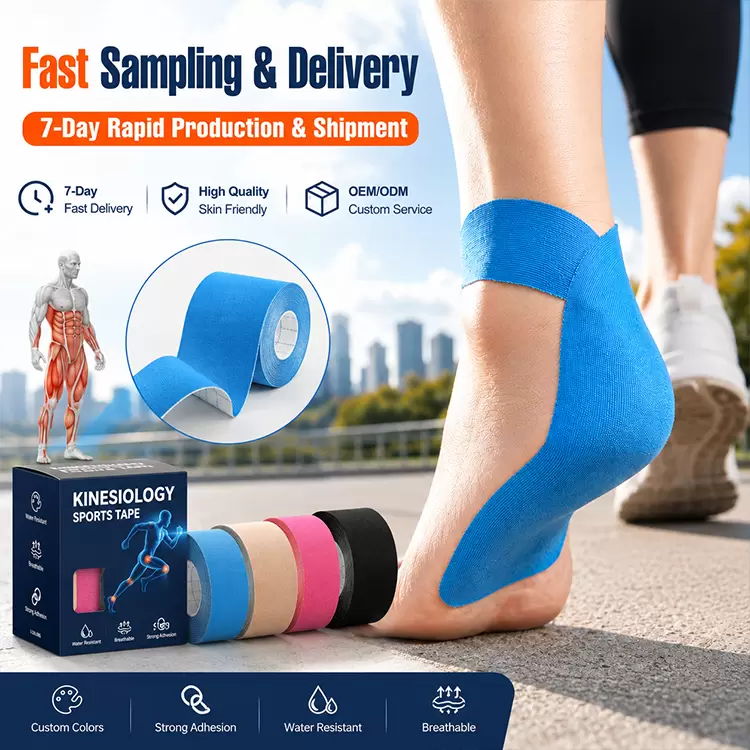
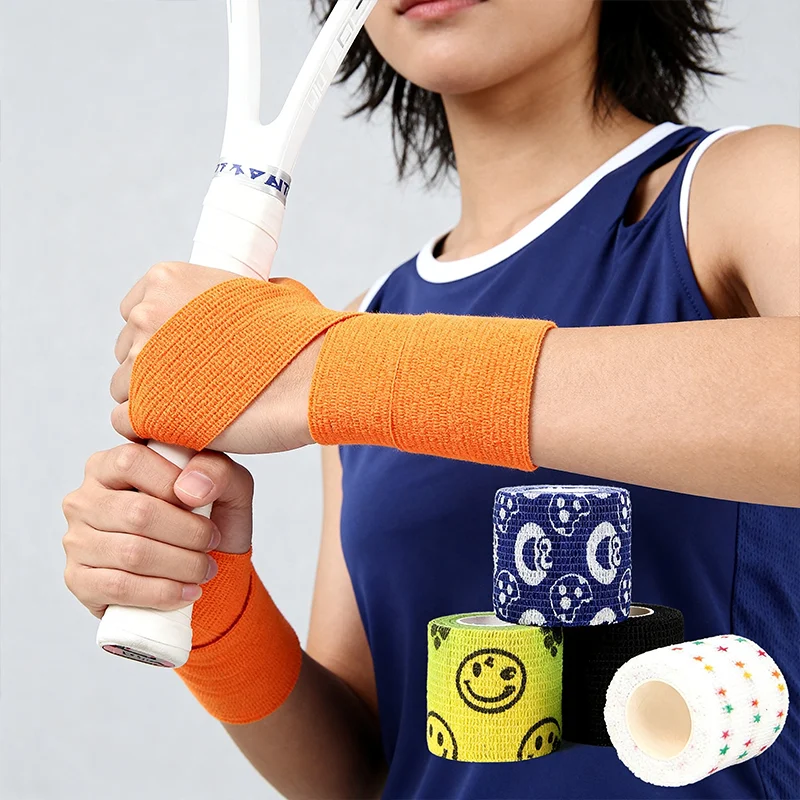
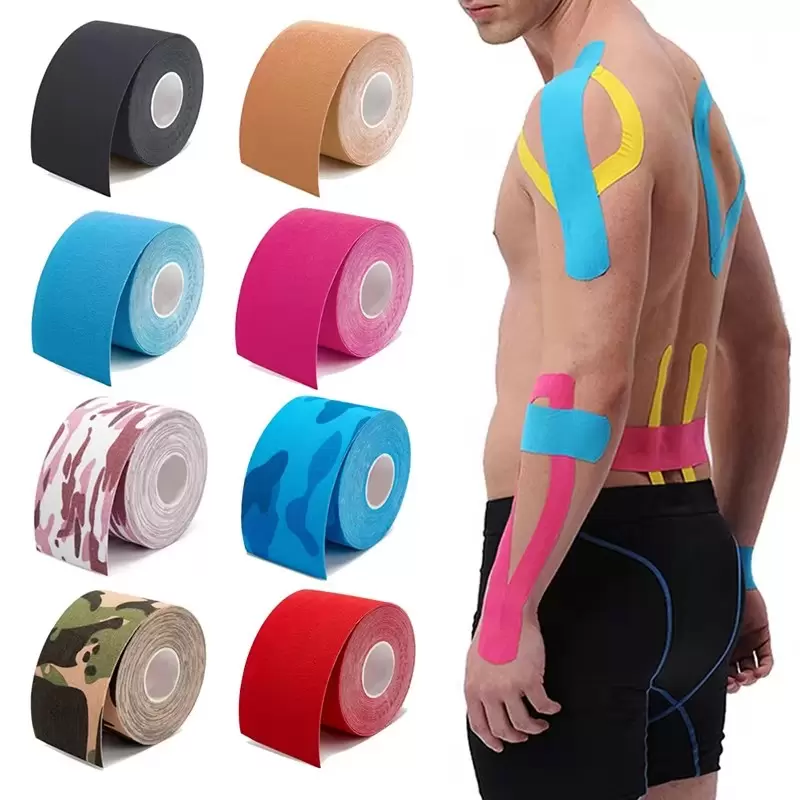
In the global performance sports supply chain, selecting a reliable gym athletic tape bulk supplier is not simply a procurement decision—it is a technical validation of product consistency, adhesive engineering stability, and long-term training safety assurance. A professional gym athletic tape bulk supplier must deliver not only high tensile support materials but also reproducible batch performance that withstands extreme sweat exposure, repetitive loading, and high-frequency usage across gyms, CrossFit boxes, and athletic rehabilitation environments.
This article provides a comprehensive technical and application-driven analysis of Gym Athletic Tape engineered for high-intensity environments, focusing on joint stabilization, sustained adhesion under perspiration, and scalable bulk supply advantages for B2B buyers such as fitness chains, sports distributors, physiotherapy networks, and professional training institutions.
Introduction: The Real Problem in High-Intensity Training Environments
High-intensity training modalities such as strength training, Olympic weightlifting, and CrossFit place continuous mechanical stress on joints, tendons, and connective tissue structures. Under these conditions, athletes frequently encounter three core operational problems:
Joint instability under load
Repetitive compound movements (e.g., deadlifts, snatches, cleans, overhead presses) place significant shear forces on wrists, knees, and fingers. Without external support, micro-instability accumulates and increases injury risk.
Acute and cumulative soft tissue strain
Tendons and ligaments are repeatedly stressed near their physiological limits. Over time, insufficient stabilization can lead to inflammation, micro-tears, or chronic overuse injuries.
Adhesion failure of conventional athletic tapes under sweat saturation
Many standard tapes lose bonding strength when exposed to prolonged perspiration or high humidity environments, leading to partial detachment during training sessions. This compromises both safety and performance consistency.
These issues are particularly critical for institutional buyers such as gyms, sports rehabilitation centers, and distributors, where product failure does not only affect individual users but also brand trust and operational liability.
A high-performance solution must therefore integrate three engineering priorities: mechanical support, adhesive stability, and environmental resilience.
Section 1: Engineering Advantages of High-Quality Gym Athletic Tape in Joint Stability and Load Distribution
A high-performance gym athletic tape is fundamentally a mechanical reinforcement system designed to reduce joint micro-movement and redistribute external force vectors during dynamic loading.
1.1 High-Density Cotton Substrate: Structural Load Absorption
The Gym Athletic Tape is constructed using a high-density cotton woven base fabric, which provides a controlled balance between rigidity and flexibility:
Tensile stability: The dense weave structure minimizes elongation under load, ensuring consistent joint immobilization.
Directional reinforcement: The fabric resists multi-axis deformation, which is critical during compound lifts involving rotational stress.
Energy dispersion: Mechanical force is partially absorbed and redistributed across the tape surface, reducing localized stress concentration on ligaments.
In high-load training scenarios such as heavy squats or Olympic lifts, this structure significantly reduces peak stress on stabilizing joints, particularly knees, wrists, and metacarpophalangeal joints.
1.2 Medical-Grade Pressure-Sensitive Adhesive (PSA): Long-Duration Fixation Stability
The adhesive layer is engineered using medical-grade pressure-sensitive adhesive (PSA) optimized for:
High initial tack (rapid skin bonding upon application)
Strong shear resistance under dynamic movement
Stability under elevated skin temperature and moisture
Unlike general-purpose adhesives, this formulation is designed to maintain bonding integrity under repetitive mechanical strain and prolonged sweating conditions.
This directly translates into extended wear time stability, enabling athletes to complete full training cycles without reapplication interruptions.
1.3 Joint Stabilization Mechanism in Functional Training
When applied correctly, Gym Athletic Tape functions through a combination of:
Mechanical restriction of excessive joint range of motion
Proprioceptive feedback enhancement
Tendon load redistribution during peak contraction phases
This results in measurable reductions in injury risk during:
Maximal load lifting phases
High-repetition metabolic conditioning circuits
Explosive plyometric movements
For B2B buyers, this means reduced user injury complaints and higher product satisfaction rates across training populations.
Section 2: Real-World Application in Strength Training, CrossFit, and Rehabilitation
The performance of athletic tape must be validated in real-world biomechanical environments rather than controlled static conditions.
2.1 Strength Training Applications
In powerlifting and bodybuilding contexts, Gym Athletic Tape is commonly used for:
Wrist stabilization during bench press and overhead press
Finger joint reinforcement during heavy deadlifts
Knee support during squats and leg press movements
The tape provides a semi-rigid external support structure that reduces joint hyperextension while preserving functional movement patterns.
2.2 CrossFit and High-Intensity Functional Training (HIFT)
CrossFit environments impose unique stress profiles due to rapid transitions between movements. Key challenges include:
Sweating-induced adhesive degradation
Rapid grip-to-lift transitions
High-frequency joint flexion and extension cycles
Gym Athletic Tape is optimized to maintain adhesion integrity during:
AMRAP (As Many Rounds As Possible) sessions
EMOM (Every Minute on the Minute) training formats
Mixed-modality circuits combining lifting, running, and gymnastics movements
Its sweat-resistant adhesive matrix ensures stable fixation even under continuous perspiration exposure.
2.3 Weightlifting and Olympic Lifting
Olympic lifting requires precise joint alignment under explosive force generation. Gym Athletic Tape contributes by:
Stabilizing wrist extension during rack positions
Reducing thumb strain in hook grip variations
Supporting knee tracking during deep squat transitions
Because Olympic lifting demands maximal force output in milliseconds, tape reliability under instantaneous load spikes is critical.
2.4 Rehabilitation and Injury Prevention Training
In physiotherapy and sports rehabilitation contexts, Gym Athletic Tape is used for:
Gradual load reintroduction post-injury
Joint alignment correction during movement retraining
Protective reinforcement during early-stage recovery
The breathable cotton structure ensures that prolonged wear does not lead to skin maceration, making it suitable for repeated daily application.
Section 3: Performance Metrics, Environmental Resistance, and Bulk Supply Advantages
3.1 Adhesion Duration Under High-Sweat Conditions
Performance testing in simulated high-intensity environments shows:
Continuous adhesion stability during multi-hour training cycles
Maintained fixation integrity even under heavy perspiration exposure
No significant edge lifting during repetitive flexion movements
In practical gym conditions, a single application can typically support several hours of continuous high-intensity activity without detachment, depending on application technique and skin preparation.
3.2 Breathability and Skin Compatibility
The high-density cotton matrix is engineered with micro-porous structure that enables:
Continuous airflow between tape and skin
Moisture vapor transmission to reduce heat accumulation
Reduced risk of skin irritation during extended wear
This balance between adhesion strength and breathability is essential for athletes who train multiple sessions per day.
Without sufficient breathability, adhesive systems can trap moisture, leading to discomfort and reduced compliance. The optimized structure mitigates this risk effectively.
3.3 Bulk Supply (Gym Athletic Tape Bulk Supplier) Strategic Value
For institutional buyers, working with a reliable gym athletic tape bulk supplier introduces significant operational advantages:
3.3.1 Cost Efficiency at Scale
Bulk procurement allows:
Reduced per-unit manufacturing cost
Optimized logistics and shipping consolidation
Lower long-term inventory replacement cost
This is particularly important for gym chains and distributors managing large user bases.
3.3.2 Batch-to-Batch Consistency Control
Consistency is a critical KPI in sports tape manufacturing. Variability in adhesive strength or fabric density can lead to:
Inconsistent user experience
Increased injury risk perception
Brand trust degradation for distributors
A professional supplier implements:
Strict raw material selection protocols
Controlled coating thickness calibration
Standardized curing and slitting processes
This ensures each batch performs identically under identical usage conditions.
3.3.3 OEM/ODM Scalability for Sports Brands
Bulk suppliers provide customization at industrial scale:
Roll dimensions optimized for different sports applications
Adhesive strength calibration for specific training intensities
Private label production for global distribution networks
This allows brands to build differentiated product lines without investing in manufacturing infrastructure.
3.3.4 Supply Chain Stability for High-Demand Markets
Fitness and sports industries often experience seasonal demand spikes. A stable bulk supplier ensures:
Continuous inventory availability
Reduced stock-out risk during peak training seasons
Predictable replenishment cycles for distributors
Section 4: Why Adhesion + Breathability Balance Is Critical for Frequent Training Users
One of the most technically challenging aspects of athletic tape design is achieving equilibrium between:
Excessive adhesion without breathability leads to skin irritation and user rejection. Excessive breathability without adhesion leads to premature failure under sweat conditions.
The Gym Athletic Tape achieves balance through:
Controlled adhesive viscosity distribution
Micro-structured cotton fiber interlacing
Optimized coating thickness
This ensures that frequent training users can apply the tape repeatedly without compromising skin integrity or performance consistency.
For high-frequency users (training 4–6 times per week), this balance directly determines long-term product adoption rates.
Conclusion: Engineering-Driven Athletic Tape as a Performance Infrastructure Component
Gym Athletic Tape is not merely a consumable accessory—it functions as a performance infrastructure component within modern strength and conditioning systems. Its value lies in:
Mechanical joint stabilization under high load
Reliable adhesion in sweat-intensive environments
Breathable structure supporting long-duration wear
Scalable bulk supply for institutional procurement
For gyms, sports teams, and distributors, selecting a technically capable gym athletic tape bulk supplier ensures not only cost efficiency but also consistent athlete safety outcomes and predictable performance standards across large user populations.
FAQ (Featured Snippet Optimized)
1. What is gym athletic tape used for in high-intensity training?
Gym athletic tape is used to stabilize joints, reduce excessive movement, and support tendons during strength training, CrossFit, and weightlifting, helping prevent strain and injury.
2. How long does athletic tape last during workouts?
High-quality athletic tape can remain stable for several hours of continuous high-intensity training, even under heavy sweating conditions, depending on application quality and skin preparation.
3. Why is cotton-based athletic tape preferred?
High-density cotton provides a balance of flexibility and rigidity, allowing strong joint support while maintaining breathability and reducing skin irritation.
4. What makes a good gym athletic tape bulk supplier?
A reliable bulk supplier ensures consistent adhesive quality, stable batch production, scalable OEM/ODM capability, and cost efficiency for large-volume procurement.
5. Can athletic tape improve training performance?
Yes. By stabilizing joints and improving proprioception, athletic tape can enhance lifting confidence, reduce fatigue-related instability, and support safer force output during training.